
Introduction
Most parents realize that their child is getting too whiny, distracted or overwhelmed at home when no obvious thing seems wrong. Very often, it is not the behaviour but the environment itself. Excessive stimulation and mental hyperactivity (noise and clutter and screens, etc) can covertly destabilise the nervous system in a child. Creating a relaxing sensory environment is an effective method of promoting Holistic Child Development. This blog states why sensory environments are important, the significance of mindful parenting to child development and how to adopt conscious parenting methods at home using toddler activities that are simple and even daily.
What Definition Does the Term Calming Sensory Environment Have?
A calming sensory environment is a place that helps to bring emotional balance through the regulation of the hearing, sight, movement and touch of a child.
It works by:
- Reducing sensory overload
- Offering foreseeably good sensory input
- This contributes to the control of the nervous system
- Proposing peaceful discovery and toying
These environments are rather based on balance as a crucial component of the comprehensive child development instead of introducing stimulation.
The Importance of the Sensory Spaces to Children
Home environment significantly contributes towards the feeling, behaviors and learning of children.
Facilitates Emotional Control
When the environment is safe, children can control with a lot of ease.
Improves Focus and Learning
Less sensory noise assistance will make children focused during play and during toddler activities.
Promotes to Play on Their Own
Relaxing environments encourage exploration that does not involve a close adult supervision.
Enhances Child-Parent Relationship
It is possible to have more responsive and less reactive interactions because mindful parenting is possible only in calm environments.
Builds Long-Term Resilience
Balanced sensory input favor emotional as well as cognitive development with time.
Such are the important advantages of mindful parenting on child development.
Basic Elements of a Relaxing Sensory House
To make a home a calming environment, one does not have to redesign the whole house, little things are the most important.
Key components include:
- Lighting: diffused and natural light rather than intensity
- Sound management: lessening the amount of noise and abrupt sounds
- Textures: luxury items, fabrics, cushions, rugs and toys that touch the hand
- Movement zones: places where one can safely climb, stretch or rock
- Silent zones: special areas to rest and lose emotions
These aspects help in the wholesome upbringing of kids by ensuring that they satisfy the sensory needs in a gentle manner.
The Steps to Apply Conscious Parenting at Home
Creating a sensorial house is a gradual process.
- Monitor the sensory behaviour of your child
Lend me what soothes and subjugates them - Simplify the environment
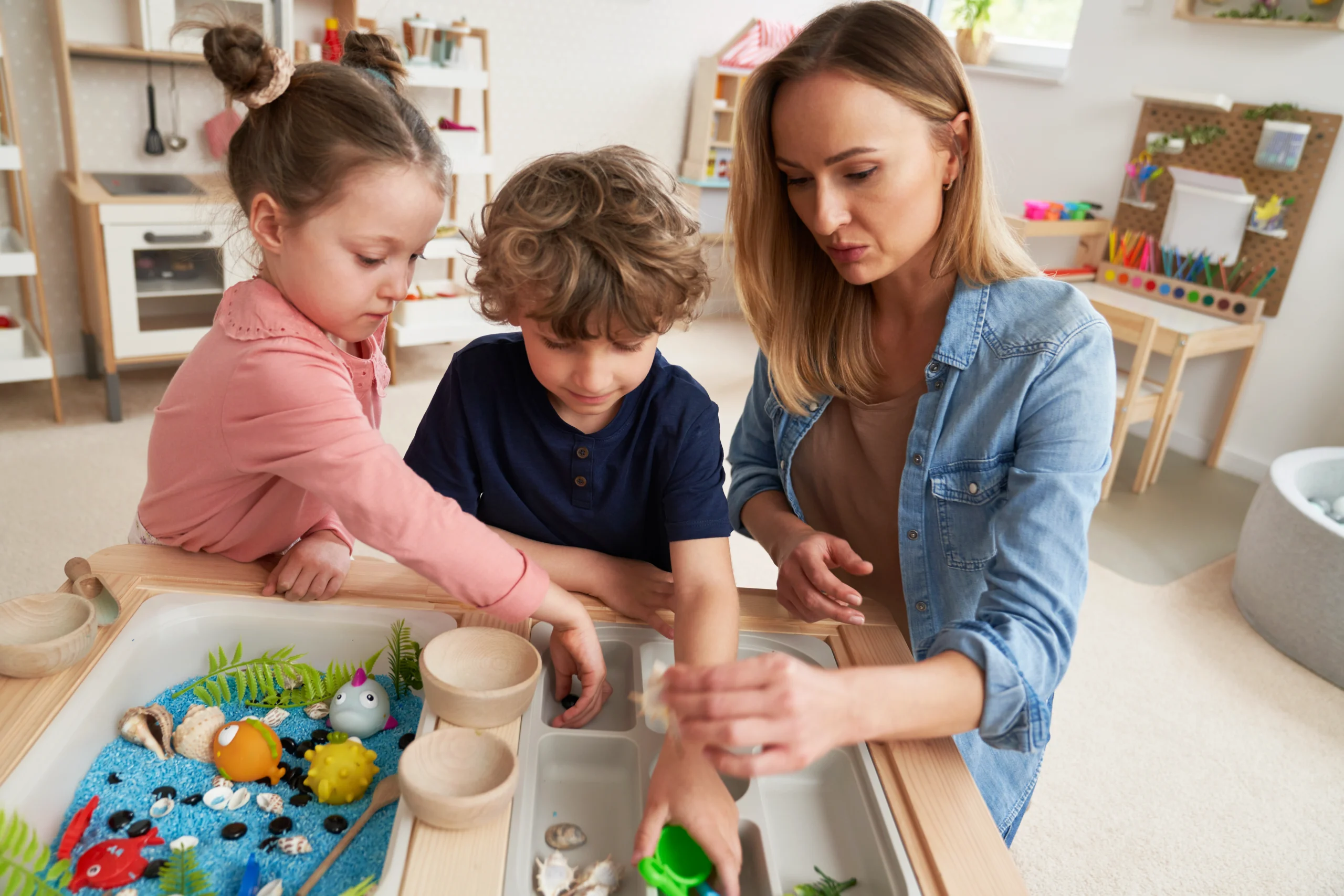
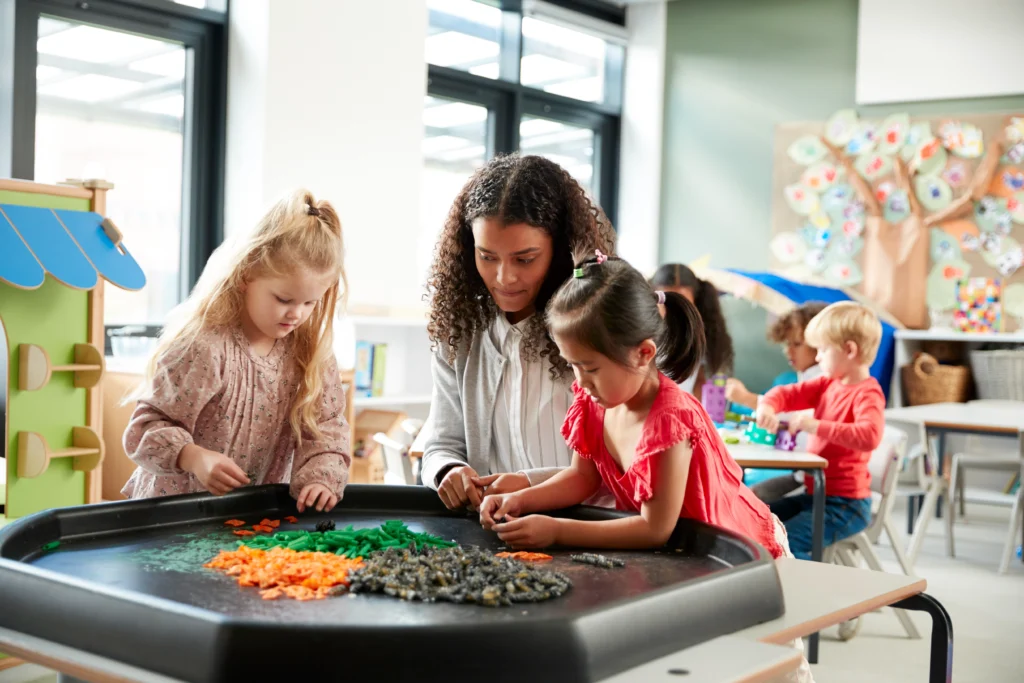
Minimize distractions, noises and screen-time - Text chilling toddler activities
Emotion can be controlled by activities such as water play, sensory bins or soft movement - Establish right schemes of the senses
Provide similar experience to the senses at regular intervals - Stay emotionally present
Conscious parenting makes the children to feel secure as they experiment with their surroundings
These actions explain how to apply conscious parenting practices within the family in a realistic and sustainable manner.
Usual Problems and Errors
One of the mistakes that are made is thinking that more toys or stimulation will enhance development. In actual sense stress is usually increased by over stimulation. The other problem is the duplication of the sensory arrangements without taking into consideration the needs of a child. The screens are over dependent with some parents that may have dysregulated the small nervous systems. The answer lies in observing, simplifying and being deliberate instead of the surplus.
Trends in Future Sensory-Aware Parenting
The mothering style is getting more environmentally oriented.
Emerging trends include:
- House designs that accommodate the senses
- Toddler activities in the nature
- Less time in front of the screen during childhood
- Neuroscience-based conscious parenting
External source: Harvard Center on the Developing Child – https developingchild.harvard.edu
Internal source: resources Explore mindful parenting resource – resources/mindful-parenting
Are You Ready to Make the Home of Your Child Calmer?
Even little environmental changes can provide an impact of a great change in the emotional world of your child. Relaxation areas encourage relaxed minds – and relaxed parenting as well.
Conclusion
One of the best methods to facilitate whole child development is the designing of sensory calming environments. Considering that children feel secure in their environment, emotional control, concentration, and self-confidence can develop naturally. This has been found to be especially important when the environment does not act in opposition to the nervous system of the child, but cooperates with it. Parents can provide an atmosphere of peace, closeness, and development by learning how to apply conscious parenting methods at home and by selecting thoughtful toddler experiences each and every day.
FAQs
What is a sensory environment that is relaxing?
It is a place that is intended to make the child feel safe and in control, as well as, to make children feel emotionally safe and controlled.
What does this contribute to holistic child development?
Emotional, cognitive, physical, and social development occur jointly on the basis of balanced sensory input.
Are relaxing surroundings suppressive to creativity?
No. They in fact increase creativity by overloading less and helping to concentrate.
Do toddler activities matter in regard to sensory regulation?
Yes. Movement, touch, and repetition activities help a toddler to control the emotions and contribute to learning.
What role is mindful parenting in sensory design?
Mindful parenting focuses on observational, presence, and emotional parenting and it uses the atmosphere to construct the child.