
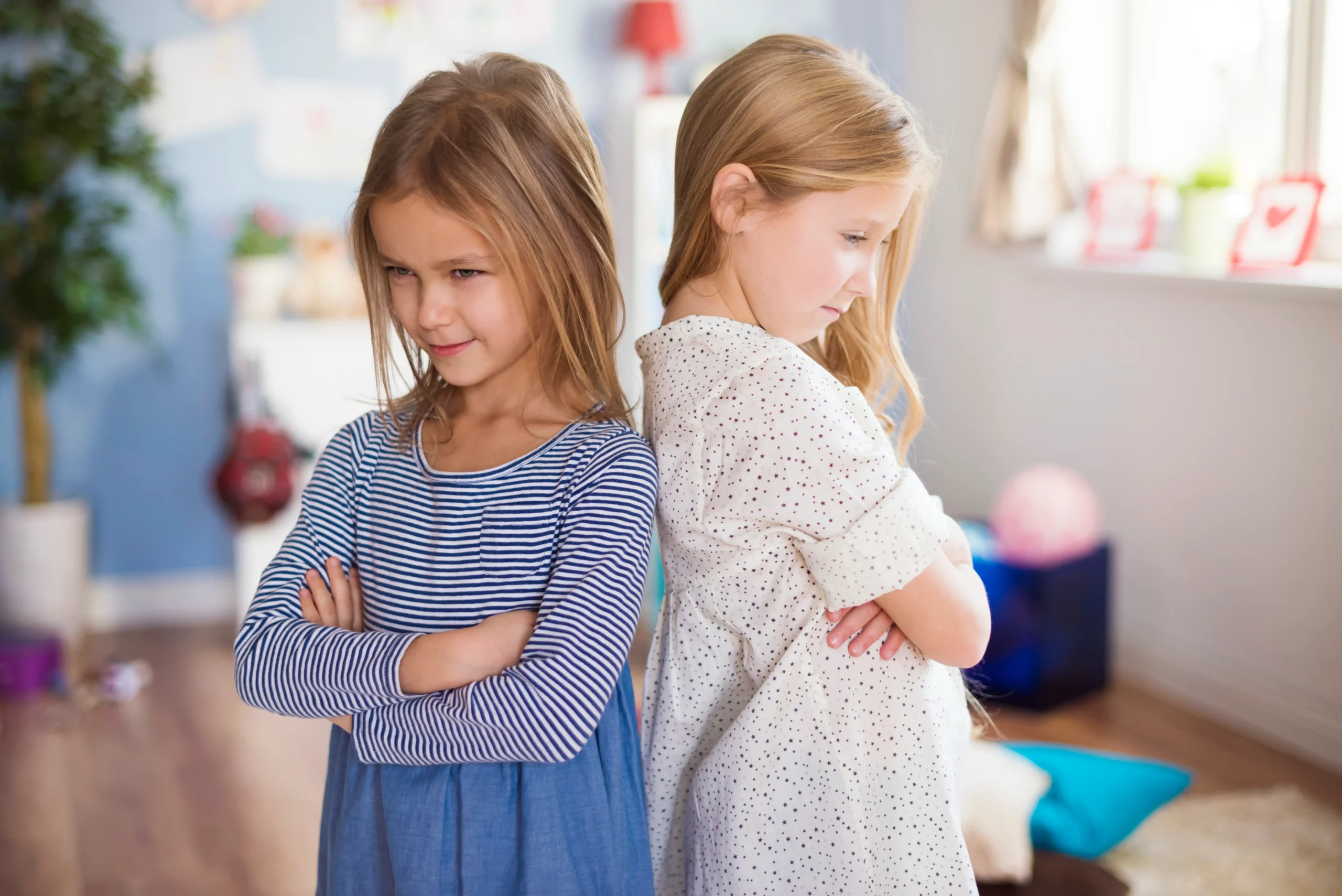
The conversations parents do not post on Instagram are about sibling fights. The third one of the morning. The one that ended with one kid in tears and the other refusing to apologise and you saying things you did not mean. By 9:15 AM you have already been pulled into refereeing duty more times than you have brushed your own teeth.
If you have two or more kids, this may feel like your daily life. Not just the occasional bad week, but part of the everyday rhythm.
Reducing sibling fights is not about teaching them to never fight. It is part of how they learn about differences and overcoming them for the family. The goal is to fight less, repair faster, and build the relationship underneath the fights, so that twenty years from now your both adult kids actually want each other in their lives.
Why Siblings Fight in the First Place
Sibling conflict serves real developmental purposes. It is not just noise. Three reasons siblings fight that often get missed:
1. They are practicing. Siblings are the safest people to test boundaries, conflict, and recovery with. For many children, sibling relationships become one of the first places they practise conflict, negotiation, and repair.
2. They are negotiating for limited resources. Your attention. The remote. The last waffle. The front seat. All of them feel limited from a child’s perspective.
3. They have different temperaments and the fit is hard. A high-energy first-born and a sensitive second-born can clash daily for years, not because either is bad, but because their different temperaments naturally create friction.
This is not an excuse for any specific fight. It is context. The fights are not a sign your kids are broken or that you have failed.
What Makes Sibling Fights Worse
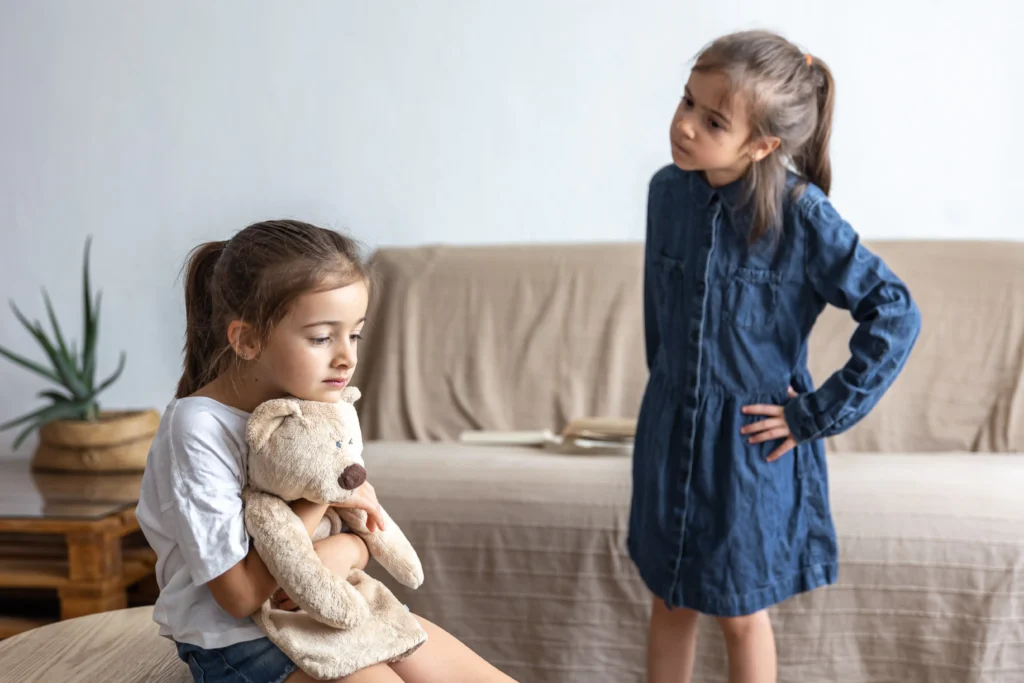
Most parents accidentally make sibling fights worse by trying too hard to stop them. Three patterns observed commonly in households where conflict has escalated:
1. The constant referee. A parent jumps in for every dispute, every time. The kids may have fewer opportunities to practise resolving disagreements themselves and instead come to rely on the parent to settle every dispute.
2. The blame-assigner. Someone has to be wrong, someone has to apologise. The “victim” gets coddled, the “aggressor” gets shamed. Over time, those roles can become entrenched.
3. Comparing the kids. “Why can’t you be patient like your brother?” “Your sister doesn’t act like this.” The comparison teaches both children that their value is conditional on outperforming the other.
If your household has settled into any of these patterns, you are in the most common parenting trap. The fix is not more refereeing. It is less.
The Conscious Parenting Approach to Sibling Rivalry
The frame: Your job is not to prevent every disagreement. Your job is to keep them physically safe, name what is happening without taking sides, and teach the conflict skills that will serve them for life.
Five strategies that hold up in real households:
1. Stop Picking Sides
When you arrive in the middle of a fight, you often don’t know what actually started it. The “victim” might have provoked. The “aggressor” might have been pushed past their limit. Picking a side hardens the roles.
What to do instead: name what you see. “You’re both upset. Looks like the block tower came down. Tell me what happened, one at a time.”
The kids learn that you are not the judge. You are the witness.
2. Coach the Resolution Skills
Most kids do not know how to resolve conflict because nobody has taught them. The skills look obvious to adults. They are not.
Practice the basic sequence at calm moments (not during a fight):
1. State what happened without blame (“The block tower fell.”)
2. Name what you feel (“I’m sad.”)
3. Say what you wanted (“I wanted to keep playing.”)
4. Hear the other side
5. Find a solution together
This sequence takes years to build. Start at age three. With regular practice, many children become much more capable of using these skills independently as they grow older.
3. Separate the Behavior From the Sibling
“He’s so mean to me” is a story about a sibling. “I felt hurt when he pushed me” is a story about the moment.
Help your kids talk about specific incidents, not about each other as people. The “sibling-as-villain” story can deepen over time. The specific-incident framing keeps the door open.
4. Protect Their Connection at Other Moments
Sibling rivalry shrinks when sibling connection grows. Practical ways to grow it:
1. Shared experiences without the parent (“You two pick a movie”)
2. Cooperative play, not just parallel play (a board game where they are on the same team)
3. Praising the relationship, not the comparison (“I love watching you two figure things out”)
4. Giving them opportunities to resolve small disagreements on their own, while staying available if needed.
5. Family rituals that include both, where they have to coordinate (Sunday breakfast prep, a shared bedtime book)
A small daily deposit into the connection account compounds over years.
5. Address the Underlying Hunger When You See It
A lot of sibling fighting is a proxy for something else. A child who feels less attention will fight for it. A child who is overwhelmed will lash out at the easiest target (their sibling).
When you see a pattern, ask: what is missing for this kid right now? Often it is one-on-one time, sleep, food, or recovery from a hard week at school. Addressing the underlying need often reduces the frequency or intensity of the conflicts.
The Comparison Table for Common Sibling Moments
| Moment | Reactive response | Conscious parenting response |
| Two kids fighting over a toy | Take the toy away, both kids cry | “Looks like you both want the bear. The bear goes on the shelf until you figure it out together” |
| Older kid hits younger | Punish older, comfort younger | Separate them to keep everyone safe, “I won’t let anyone hit. Both of you, separate room for a minute” |
| Younger kid takes older’s stuff | “Just let him play with it” | “Your brother took your headphones without asking. Tell him that. He can give them back” |
| Constant tattling | “Stop tattling” | “If someone isn’t safe, always tell me. If it’s a small disagreement, let’s see if you can work it out first. “ |
| Bedtime arguing about whose turn | Sigh, pick one, the other cries | “Last night was the older one. Tonight is the youngest. Tomorrow is the older one’s.” |
The reactive response handles the moment. The conscious parenting response is a small deposit in the long game.
What to Avoid Doing
Five things that quietly worsen sibling rivalry, even in well-meaning households:
1. Treating them as a unit when they are individuals. Each kid needs to feel like a separate person, not “the kids.” One-on-one time prevents this.
2. Buying identical items to “be fair.” It can unintentionally teach that fairness always means sameness, which is not true and will fail in adult life.
3. Asking the older to “be the role model.” That can place an unfair emotional burden on the older child. Causes resentment. Lighten it.
4. Ignoring the dynamic that has formed. If one kid has become “the difficult one,” that is a pattern, not a personality. The pattern can shift.
5. Comparing them out loud. Even small comparisons compound. They hear all of them.
Each is correctable. Each is more correctable when caught earlier.
When to Bring in a Coach or Therapist
Most sibling rivalry can be improved with conscious parenting practice at home. Bring in outside support when:
1. The fighting is physical and one child is being injured or threatened
2. One child is consistently scapegoated by parents or the other child
3. The dynamic has remained unchanged for over six months despite parent effort
4. A child shows signs of long-term anxiety or low self-worth tied to the sibling relationship
5. The household has experienced a major change (move, divorce, new sibling, illness) and the rivalry has spiked
Outside support is acceleration. Outside support can help families understand and change these patterns more effectively with the right framing.
Final Thoughts
The siblings you raise today are the siblings your kids will have for life. The everyday moments you’re living now become part of the relationship your children remember later.
Reducing sibling fights is not about silence at home. It is about teaching two small humans how to disagree, repair, and stay in a relationship. That is a lifelong skill. Everything else is noise.
So next time the fight starts, take a breath. Name what you see without taking sides. Coach the resolution. Address the underlying hunger when you spot it. And believe, against the noise of the morning, that you are building something that lasts.
If you’d like more personalised guidance, Vedangi Brahmbhatt’s Conscious Parenting Course offers practical strategies to help siblings build stronger relationships while reducing everyday conflict.
FAQs
Q1. Why do siblings fight so much?
A. Sibling rivalry is normal child behavior. Kids often fight while they are learning how to navigate conflict resolution, competition for attention or shared resources, and working with different personalities and temperaments.
Q2. How can I reduce sibling rivalry at home?
A. Stay neutral, teach conflict-resolution skills, encourage cooperation, don’t compare, spend individual one-on-one time with each child. It also reduces everyday arguments by building their relationship outside of conflict.
Q3. Should parents step into every sibling argument?
A. Not always. If everyone is safe, allow the kids to work through small differences and intervene to guide them when needed. If the issue becomes physical or someone is in danger of being hurt, step in immediately.
Q4. What should I avoid doing during sibling conflicts?
A. Don’t take sides, compare the children, label them as “the difficult one”, expect the older child to back down all the time, or sort out all their arguments for them. Such responses may accidentally increase rivalry over time.
Q5. When should I seek professional help for sibling rivalry?
A. If arguments frequently escalate to physical aggression, if one child is always being picked on or left out, if the rivalry continues despite consistent parenting approaches, or if certain changes in the family have made the relationship much worse, it’s time to get help.