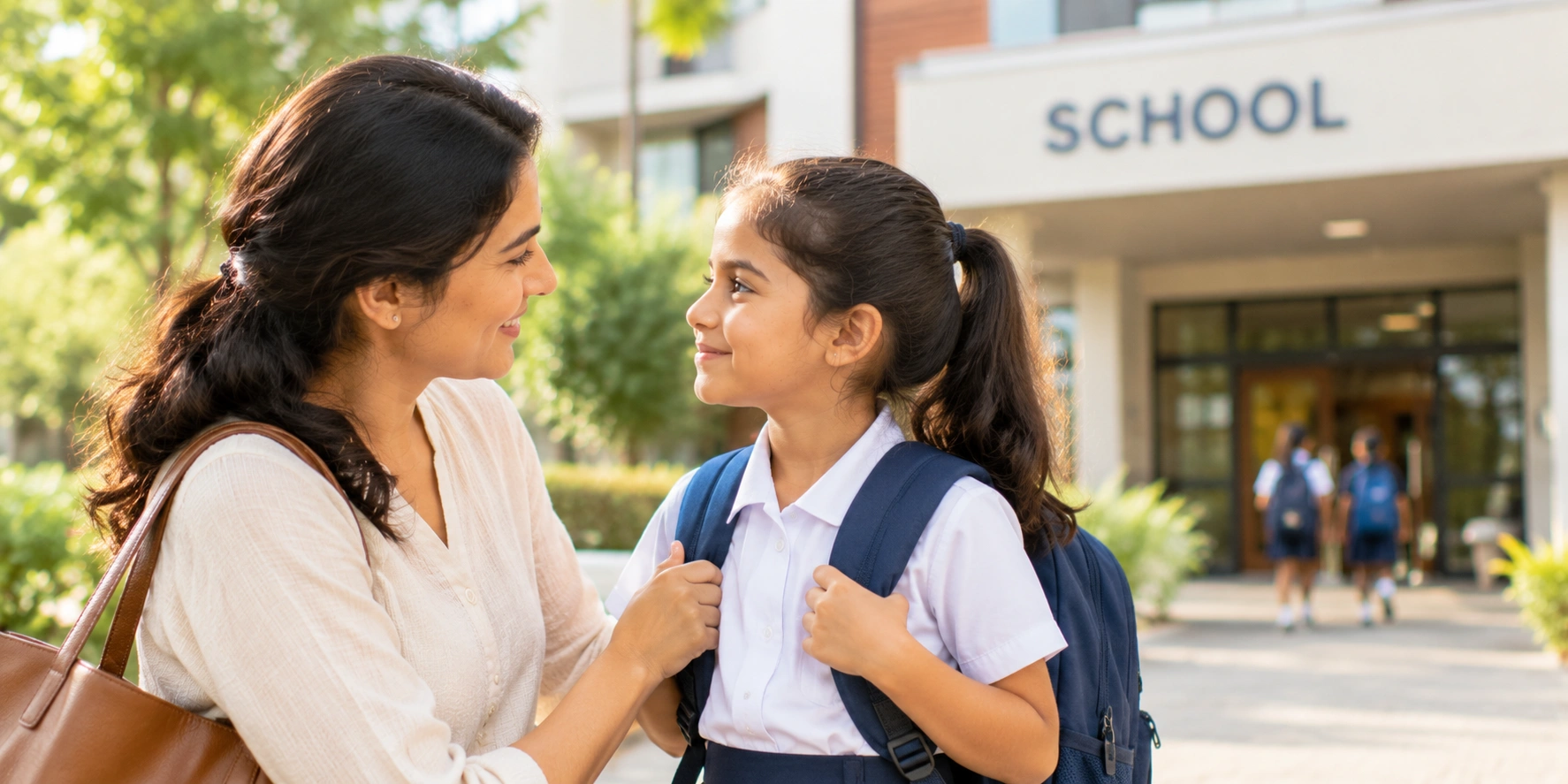


“Let me do it myself” can be one of the most important things a child says.
It may come when a toddler insists on putting on their shoes, when a school-age child wants to pack their own bag, or when a teenager wants more control over their schedule. While these moments can sometimes create extra work for parents, they also provide opportunities for children to practice responsibility and independence.
The challenge is finding the balance between helping and taking over. As a conscious parenting coach, I believe independence grows best when children feel supported enough to try, make mistakes, and learn without feeling controlled or judged.
Quick Answer: What Responsibilities Are Appropriate for Children?
Age-appropriate responsibilities should match a child’s developmental abilities, not simply their age. Young children can help with simple routines and tidying, school-age children can manage personal belongings and household tasks, and older children can gradually take responsibility for planning, organization, and decisions. Parents can provide guidance and structure while allowing children increasing ownership.
Key Takeaways
- Responsibility should grow gradually as a child’s skills and confidence develop.
- Helping a child is different from doing everything for them.
- Connection provides the emotional safety children need to attempt unfamiliar tasks.
- Mistakes can become opportunities for problem-solving rather than reasons for criticism.
- Independence does not mean leaving children to manage everything alone.
Why Independence Begins With Connection, Not Control
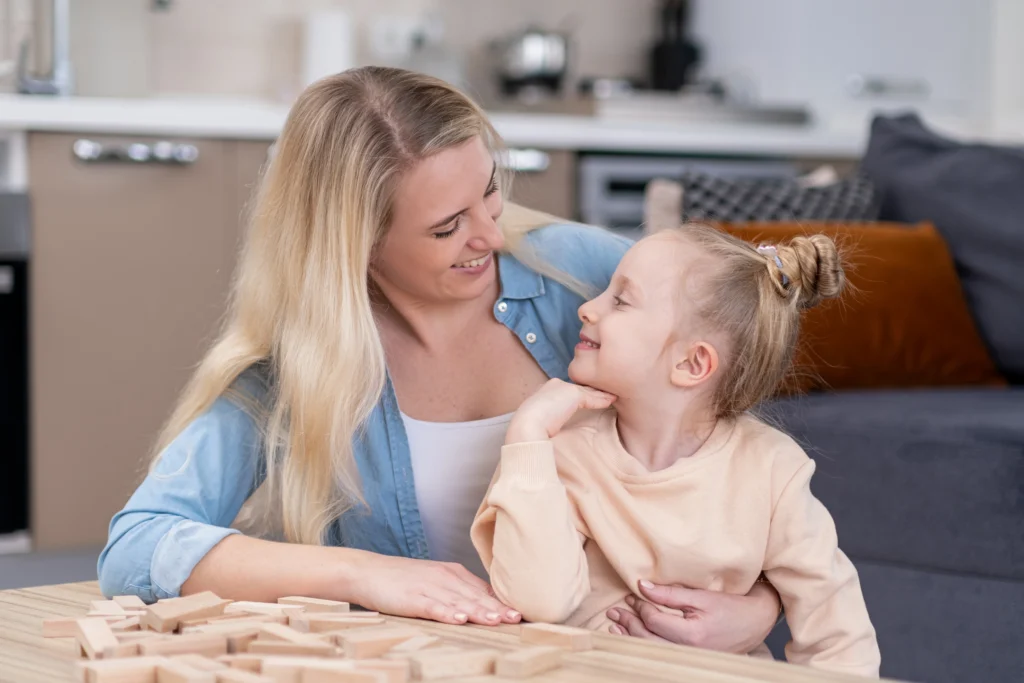
Independence is sometimes misunderstood as children needing to do everything without help. That is not what healthy independence looks like.
A child can be independent while still knowing that a parent is available when something feels difficult.
Vedangi’s conscious parenting approach emphasizes connection, emotional awareness, compassionate boundaries, and encouraging independent thinking. The goal is to help children become capable while maintaining a secure parent-child relationship.
Consider a child learning to tie their shoes. A parent may be tempted to take over when the child struggles because it is faster. But if the parent consistently steps in, the child loses opportunities to practice.
A more supportive response might be:
“I can see you’re finding that tricky. Would you like to try once more, or would you like me to show you one part?”
The message becomes, “I believe you can learn this, and I am here if you need me.”
That is very different from either controlling the process or leaving the child completely alone.
What Responsibilities Can Children Handle at Different Ages?
There is no universal checklist that applies perfectly to every child. Development, temperament, family circumstances, and previous experience all matter. The following examples are starting points rather than strict requirements.
Toddlers and Preschoolers
Young children can participate in simple tasks that are part of everyday routines.
Examples may include:
- Putting toys into a basket
- Placing clothes in a hamper
- Carrying a lightweight item
- Helping set the table with safe items
- Choosing between two appropriate outfits
- Putting away books after reading
At this age, parents will still provide substantial support. The purpose is participation and practice, not expecting adult-level responsibility.
Elementary-School Children
As children develop more practical skills, responsibilities can become more consistent.
They may be able to:
- Pack parts of their school bag
- Keep track of personal belongings
- Help with simple household chores
- Organize their study space
- Prepare simple snacks with appropriate supervision
- Follow a morning or evening routine
Parents can gradually move from doing the task with the child to checking in afterward.
Tweens and Teenagers
Older children can take greater ownership of tasks that affect their daily lives.
Depending on their abilities and circumstances, this might include:
- Managing school materials
- Keeping track of assignments
- Helping plan family activities
- Preparing simple meals
- Managing personal spaces
- Taking responsibility for agreed household tasks
- Learning to plan time around school and other commitments
The emphasis should gradually shift from parental reminders toward self-management.
How Parents Can Encourage Responsibility Without Creating Pressure
Giving a child responsibility does not mean expecting perfection.
Start With What the Child Can Reasonably Manage
If a task is too difficult, constant failure can make the child feel incapable rather than independent. Break larger responsibilities into smaller steps.
Instead of saying:
“Clean your room.”
you might begin with:
“Let’s start by putting the books on the shelf.”
As the child becomes more capable, increase the level of responsibility.
Teach Before Expecting Independence
Children cannot automatically know how to organize, plan, clean, or solve problems simply because they have reached a certain age.
Show them how.
Then practice together.
Then step back.
This gradual movement from support to shared responsibility to independence can be more useful than expecting a child to suddenly manage a task alone.
Let Children Experience Reasonable Mistakes
If a child forgets their water bottle, a parent may instinctively rush to school to deliver it. Sometimes that is necessary, but when circumstances are safe, a forgotten item can also become a learning opportunity.
The question is not, “How can I make sure my child never makes mistakes?”
It is:
“What can my child learn from this mistake?”
What Can Make Children Resist Responsibility?
Children may resist responsibilities for many reasons. The task may feel boring, difficult, unfamiliar, or overwhelming. They may also be used to a parent completing the task for them.
Parents can sometimes contribute to the pattern unintentionally by correcting every small detail.
For example, a child finally makes their bed, but the parent immediately points out that the blanket is uneven and the pillow is in the wrong place.
The child may hear the criticism more strongly than the encouragement.
If the goal is independence, ask whether the task actually needs to be done exactly your way.
There is an important difference between teaching a necessary standard and controlling every detail of how a child completes a task.
Conscious parenting encourages parents to become aware of their own reactions and model the behaviors they want children to develop.
A Simple Scenario: When Helping Becomes Doing Everything
Consider a child who regularly leaves their school bag, shoes, and lunch container scattered around the house.
The parent repeatedly reminds the child, searches for missing items, and eventually organizes everything themselves because mornings become stressful.
The child becomes dependent on those reminders, while the parent becomes increasingly frustrated.
A different approach could involve creating a simple evening routine. The parent might initially sit with the child and make a checklist together:
- Empty the lunch container.
- Put homework in the folder.
- Pack the school bag.
- Place shoes in their usual spot.
For the first few days, the parent may provide support. Over time, the parent can reduce the reminders and allow the child to take more ownership.
The learning is not simply “pack your bag.”
It is “I can manage something important in my own routine.”
What I have Observed as a Parenting Coach
In my coaching conversations with parents, I often notice a tension between two understandable desires. Parents want their children to become independent, but they also want to protect them from frustration and mistakes.
I encourage parents to ask themselves, “Am I helping because my child genuinely needs support, or because it is easier and faster for me to do it?”
That question can be surprisingly useful.
I have found that stepping back does not mean becoming uninvolved. It means changing the type of support we provide.
Sometimes I encourage parents to move from doing to teaching, and then from teaching to trusting.
A parent might initially say, “I’ll help you pack your bag.” Later, that becomes, “What do you need to remember tonight?” Eventually, the child may not need the reminder at all.
This is the kind of Parenting Guidance I believe can make independence feel connected rather than forced. Children need room to practice responsibility, but they also need to know that their parent remains emotionally available.
For me, conscious parenting is not about controlling every outcome. It is about being intentional about when to step in, when to guide, and when to let a child try.
A Better Way to Think About Children’s Growing Independence
The aim is not to create children who never need help.
It is to gradually help them develop the confidence and skills to say:
“I can try this.”
“I know what to do next.”
“I made a mistake, but I can work through it.”
Parents can support that process by offering age-appropriate responsibilities, modeling patience, setting reasonable expectations, and allowing children increasing ownership as their abilities grow.
If you are unsure whether you are helping, reminding, rescuing, or controlling too much, personalized Parenting Guidance can help you examine your family’s patterns and identify practical changes that fit your child’s needs.
Helping Children Grow Capable Without Pushing Them Away
Independence does not have to come at the expense of connection.
When parents give children responsibilities that match their abilities, allow reasonable mistakes, and remain available for support, everyday tasks can become opportunities for confidence and growth.
As a conscious parenting coach, I encourage parents to remember that the goal is not to make children independent as quickly as possible. It is to help them gradually discover that they are capable, while knowing they have a safe relationship to return to when they need guidance.
If you’d like more personalised guidance, Vedangi Brahmbhatt’s Conscious Parenting Course offers practical strategies for creating routines that support calmer, more connected family life.
Frequently Asked Questions
Q1. What responsibilities should children have at different ages?
A. Young children can help with simple tidying and personal routines. Elementary-age children can take responsibility for belongings, basic chores, and parts of their school routines. Tweens and teens can gradually manage more complex tasks, planning, and personal responsibilities.
Q2. How can parents teach responsibility without creating pressure?
A. Start with manageable tasks, explain what is expected, teach the skill before expecting independence, and increase responsibility gradually. Encourage effort and learning rather than expecting children to perform every task perfectly.
Q3. Why is independence important for a child’s emotional development?
A. Age-appropriate independence gives children opportunities to practice decision-making, problem-solving, and responsibility while experiencing the confidence that comes from doing something themselves. Children still need appropriate parental support throughout this process.
Q4. How can parents encourage children to complete tasks without constant reminders?
A. Create predictable routines, make expectations clear, teach the task, and gradually reduce reminders. Visual checklists can also help younger children remember steps without relying entirely on a parent’s verbal prompts.
Q5. What is the difference between giving responsibility and controlling a child?
A. Giving responsibility means allowing a child appropriate ownership while providing guidance and boundaries. Control focuses more heavily on directing how and when everything must be done. Conscious parenting aims to provide structure without unnecessarily taking away a child’s developing autonomy.