

Balancing Respect and Boundaries While Staying Child-Centered

Raising Confident Children Without Losing Authority Many parents today are caught in a quiet dilemma. We want to be gentle.We want to be respectful.We want to raise emotionally secure children. But we also want our children to listen, follow limits, and develop discipline. Somewhere between authoritarian parenting and permissive parenting lies a powerful middle ground — one that balances structure with empathy. This is the foundation of mindful parenting and the philosophy of the conscious parent. As a Child Development Specialist, I often tell families: respect without boundaries creates insecurity, and boundaries without respect create fear. The goal is both. Across the United States, parenting culture is shifting. According to the American Psychological Association, modern parents report higher stress levels than previous generations, often because they’re trying to “get it right.” The good news? Research consistently shows that children thrive in environments that combine warmth and structure — a hallmark of Holistic Child Development. Let’s explore how to balance both effectively. 1. Redefine Respect: It Goes Both Ways Traditionally, respect in parenting meant obedience. Today, we understand respect differently. Respect means: This does not remove authority. It refines it. For example, instead of saying:“Because I said so.” Try:“I understand you don’t like this limit. The rule still stands.” This approach supports Emotional Regulation Kids are still developing. Children feel heard without being in charge. The Benefits of mindful parenting for child development include higher emotional intelligence, stronger parent-child attachment, and better long-term cooperation. Respect builds trust. Trust increases cooperation. 2. Boundaries Create Safety, Not Control Children test limits not because they want power — but because they seek clarity. When boundaries are inconsistent, children feel uncertain. When boundaries are firm and calm, children feel secure. Here’s how to implement healthy limits through How to implement conscious parenting techniques at home: A. State Limits Clearly “I won’t let you hit.” B. Validate the Emotion “You’re really angry.” C. Offer an Alternative “Let’s stomp your feet instead.” This aligns with Positive discipline strategies for toddlers and older children alike. Discipline means teaching, not punishing. Using Nonviolent Communication, we separate behavior from identity. Instead of labeling the child (“You’re rude”), we address the action (“That tone felt disrespectful. Let’s try again.”). This is also where Active Listening Parenting becomes powerful. Listening does not mean agreeing — it means acknowledging. 3. Stay Child-Centered Without Becoming Child-Led Child-centered parenting means considering the child’s developmental stage, emotional needs, and temperament. It does not imply giving up structure. Basic Toddler Play that offers choice within a setting — Red shirt or blue shirt? — develops independence without anarchy. Shared responsibility is formed through regular Family Meeting check-ins. Ask: What are some of the rules that are making our home peaceful? In conscious co-parenting families, the boundaries of caregivers are aligned and bring about no confusion. Parents who have considered Conscious Co-Parenting NJ tend to have better consistency with the homes who have similar expectations. Children are happy when their adults are consistent. Real-Time Parenting Context Children of today are growing up in a world of: Constant digital stimulation Academic pressure Social media comparison Less outdoor and unorganized play. There is still increasing anxiety and emotional responsiveness among children, according to CDC data. This renders balanced parenting all the more significant. Parents are becoming more and more resorted to coaching, workshops, and Best Parenting Books to learn how to be empathetic and structured at the same time. The point is evident: the warmth and limits are not the opposite, but they are companions. Suppose that, as it is thought: Non-coercive kindness = permissiveness. Hardness and coldness = authoritarian control. Warmth + firmness = emotionally secure leadership This is a middle way which promotes Holistic Child Development, fostering emotional intelligence with responsibility. When children experience respectful authority, they internalize discipline rather than fear it. A Personal Reflection I often remind families: your child does not need a friend. They need a steady guide. We display self-control when we remain composed when we have limits. Listening as we impose our regulations, we educate dignity. Love does not have boundaries.They are expressions of it. This is the quiet strength of mindful parenting. Conclusion: Structure with Compassion There is no perfect way to balance respect and boundaries. It involves intent. The following is just one of the basic practices you can attempt today: The following time you establish a limit, inquire, Am I able to maintain this boundary without agitation and in a dignified manner? When the answer is yes, it means that you are a grounded authority leader. Need additional help in developing a more emotionally even-handed family dynamics? Check out our consultations and learning programs at https://vedangibrahmbhatt.com/ Follow us on for weekly parenting insights. Don’t forget to follow us on Instagram and YouTube for practical tools and expert guidance. For the latest news and updates, click here to view our recent press releases and stay connected with our work. Respect builds connection.Boundaries build security.Together, they build confident children.
When Your Partner Parents Differently: Finding Common Ground in Co-Parenting

One of the parents likes format and clear lines. The other is disposed of being flexible and emotional in negotiation. Improper parenting is no more than a thing and does not result in planning by the majority of couples but happens under the pressure of cases and sleep deprivation and acquiring certain habits of their childhood. Such differences may gradually become the daily decisions. Here conscious co-parenting is required. As opposed to the discussion of who is right, it assists the partners to see why they parent in their way and how to bring it together so as to benefit the child. God creates a common ground between spouses, helps them communicate more effectively, and co-parent as a team, even when the styles are not the same: this is the topic of this blog. What Does It Mean When Spouses Parent Differently? Differences in parenting as a norm are normally caused by upbringing, temperament and emotions regulation style—rather than absence of care. Common differences include: Conscious co-parenting is not meant to eliminate these differences. It is interested in congruence of values, communication and long-term objectives even though there are differences in day-to-day styles. The Significance of Finding Common Ground Espouses Consistency to Children Children get a sense of safety by predictability of expectations though the style of delivery may vary. Reduces Parental Conflict Application of Nonviolent Communication helps avoid the situation where a conflict gets personal. Enhances Parenting Partnership Harmony favors commitment factor among partners and eliminates bitterness and emotional barriers. Development Supports Toddler Development It can also be more useful to have consistent strategies of positive discipline with the toddlers to make them control their emotions and behaviour better. Basic Elements of Conscious Co-Parenting Shared Parenting Values The couples come to an agreement on the criteria that are most important: respect, emotional safety, independence, and then discuss ways of approach. Active Listening Parenting When you listen to discern intention in your partner, this will minimize the possibility of defensiveness and power struggles. Nonviolent Communication A need that is stated in a non blameful manner will enable couples to calmly discuss parenting options. Role Clarity Knowing how and when to intervene and when not to intervene helps avoid detracting one another in front of the child. Legal Lucidity: Finding Ground in the Practice The Top Ten Bad Things That Couples Do The mistake that is often done is to rebuke the other parent in the presence of the child. This causes misunderstanding and destruction of trust. Not taking another approach as being better and assuming one approach to be better is also a challenge. This tend to amplify war rather than ending war. Its answer lies in teamwork. Conscious co-parenting is effective in a situation where people do not concentrate on argumentation but the mutual outcome. Future of Co-Parenting Partnership Contemporary parenting is moving towards interactive, emotionally sensitive types. It is reflected in the couples who are now seeking communication applied techniques, practice, and models of shared parenting to minimize conflict. Practical application examples demonstrate that children succeed in circumstances where parents dispute with each other and put on a facade of mutual interest and support. The next parenting is not homogeneity—but congruity. Taking the Next Step When the discussion of parenting differences becomes tiresome, put the discussion on hold and refer to common beliefs. Unity does not only start with compromise, but with a comprehension. Conclusion Different partnering will not be a failure but an indication of untimely congruency. Couples with the use of conscious co-parenting are able to allow personal styles to flourish but maintain some semblance and security to their child. Parents can shift on an environment of tension to an environment of teamwork using such tools as Nonviolent Communication, Active Listening Parenting, and positive discipline tools when disciplining toddlers. Coming together to parent is not doing it the same way, it is just making a step in the same direction. Follow Vedandi Brhambhatt on Instagram and YouTube, for daily insights, mindful parenting tips, and expert guidance on raising emotionally balanced children. FAQs Is it usual that couples raise children differently?Yes. Disagreements are also typical and usually depend on how people grow up and their character. Nonviolent Communication to the rescue of co-parenting?It minimizes accusations and focuses on discussion on solutions and needs. Is it appropriate that parents concur in all ways of discipline?Not that, but there must be constancy about fundamental values and boundaries. What are the strategies of positive discipline with toddlers?They emphasize instruction, relationship and non-punitive boundary. Is it possible to consciously co-parent in the time of conflict?Yes. Even better, it works best when differences are realized and dealt with amicably.
Recognizing Trust Ruptures and Rebuilding Connection Intentionally With Your Child

The thought goes through the mind of every parent on what he or she should have done differently, yelling, missing nonverbal cues, responding in a hasty manner. Although these moments might appear minor, they make the children feel that they are interrupted. Such events are referred to as trust ruptures, and they are a normal family affair. It is not about not getting involved in them but the reaction we get after it. These are the time of growth to the conscious parent. This blog will discuss the questions of identifying trust ruptures, its importance, and how mindful parenting can assist in restoring the connection and being intentional about association at home. What Do You Mean by Trust Ruptures in Parenting? With a trust rupture, a child senses being emotionally invisible, unheard, or unsafe during a time of communication. This does not necessitate the extreme conflict, in fact, in most cases, it occurs when faced with ordinary stress. Common examples include: In mindful parenting, perfection is not considered an indicator of trust, but rather, the way it is able to rectify these situations. The Importance of Rebuilding Connection Promotes Emotional Control Among Children Children get to know how to regulate their emotions by watching how adults react to wrongs and mend relationships. Enhances Reliable Affiliation Mending trust will teach the children that relationships need not collapse despite conflict and still be safe. Encourages Open Expression Children who believe in reconnection are more willing to be honest when they are giving their feelings. Builds Long-Term Resilience Children brought up in repair-oriented upbringing acquire better coping and relationship ability. The Essential Elements of Volitional Reconnection Awareness The first step to repairing disconnection is to recognize the fact of its existence. Paying Attention to Our Parenting Being present and not reactive is one way of regaining emotional safety. Emotional Regulation Self-controlling parents make room also to self-controlling children. Consistent Repair Little, continual reconnection does add up more than a single conversation. How to Build Intentionally at Home the Connection These stages show how one can practice conscious parenting methods at the household level in a realistic more informal manner. Ubiquitous Problems of Children The most common one is mistaking the fact that children forget the emotional moments very fast. Torns are usually reenacted as behavior issues. The other issue related to discipline without emotional mending. This may further make one feel disconnected rather than solve the same. Consistency is the key to the solution. Awareness of parenting is created by correction rather than perfection. The Future of Repair and Conscious Parenting Emotional safety is becoming a known concept in the emerging parenting of the present era. Educational institutions, counseling and family-upbringing initiatives are now focusing on emotional control interventions in children and their parents. In practical cases, carefully designed repair makes children grow up to attain better communication skills, empathetic individuals, and resilience. Connection-based parenting strategies that are level in guidance and insight are the future of parenthood. Taking the Next Step In case you observe the repetition of a tense situation or emotional aloofness, take a moment and cogitate. There is usually an honest moment where the repair process starts. Conclusion This does not mean that there is failure when trust ruptures occur because they are a normal part of human relationships. The conscious parent realises that the rupture does not actually define the child, but what follows it is the repair. With conscious parenthood, emotional insight, and reconnection through conscious choice, families will be able to regain trust again and again. Emotional Regulation among Kids It begins by adults who act as role models by modeling accountability, presence and compassion. Connection is something that cannot be lost forever, it is something that can be restored, a choice. Follow Vedandi Brhambhatt on Instagram and YouTube, for daily insights, mindful parenting tips, and expert guidance on raising emotionally balanced children. FAQs How do trust ruptures between children and parents take place?Trust rupture is usually caused by emotional response, dismissive response, or failure to repair conflict. Is there a possibility of rejoining connection after numerous errors?Yes. Trust can be restored consistently by honesty, consistent repair and presence at any age. What is the way mindful parenting can fix trust?Mindful parenting is the attempt to be mindful of their thoughts, emotions, and responses to situations instead of reacting. What is the contribution of emotional regulation in children?It assists children to deal with emotions, develop resiliency, and healthy relationships. What are the tips of conscious parenting that may be practiced by parents on a daily basis at home?Seeing feelings, mending relationships later, and failing to use authority in situations that could be handled by connecting in others.
How to Build Emotional Safety With Your Child: Recognizing Trust Ruptures and Rebuilding Connection

Any parent desires his or her child to be safe—emotional safety cannot be built by means of not making mistakes. It is constructed through the reactions to the situation that failed. Calling out, neglecting feelings or hurrying moments may accidentally cause minor gaps in trust. In the long run these instances accumulate. This is the reason why mindful parenting is more than ever. This blog discusses the way emotional safety is established, the way trust ruptures occur, and the role of conscious parent in re-establishing the relationship through awareness, emotional regulation and active listening. Outstanding Question What Is Emotional Safety in Mindful Parenting? The factor of emotional safety will imply that a child feels free to share thoughts, feelings, needs without feeling fear of punishment, humiliation, or rejection. Emotional safety in mindful parenting is effected in the following ways: Children do not require faultless parents. The parents must be able to recognize the loss of connection — and know how to regain it. It Is Important to Note That Emotional Safety Is an Important Issue Among Children Helps Children With Emotional Control Children get to know how to regulate their emotions through observing how adults cope with their own emotions. Establishes Trust and Achieving Attachment Development of confidence in relation and self-expression occurs when children are heard. Promotes Behaviors of Frankness When children are safe emotionally, there is a high chance of them sharing fears, mistake, and struggles. Minimizes Behavioural Problems A lot of the so-called behaviour problems are actually indications of unfulfilled emotional needs rather than disobedience. Fundamental Building Blocs of Emotional Safety Mindful Awareness It is important to notice how you feel and then respond so as to avoid being reactive. Active Listening Parenting Interrupting and correcting children makes them feel that they are not valued and are not understood. Emotional Validation Feelings have to be acknowledged, even in situations where we are required to make corrections in behaviour, as this way keeps us connected. Repair After Rupture Forgiving and reconciling is a lesson that children understand that relationships rectify. Rebuilding After Trust Ruptures Top Five Parenting Blunders A typical error is that authority is lost by apology of parents. As a matter of fact, accountability creates respect and trust. The other problem is concentrating on correcting behaviour and disregarding the emotional influence. This may widen disaffiliation. The solution is consistency. The combination of emotional safety and awareness, listening and repair aid this because, when observed by parents frequently, peace of mind can develop, and not due to wishing to control. The Future of Safe Parenting Happiness Due to the rise in awareness over child development, a rise in the number of families that are adopting mindful parenting practice in raising their children has been witnessed. Emotional regulation skills have since become the approach of schools, therapists, and parenting programs, both among adults and children. The practical application of the findings can be seen through the fact that children who grow emotionally safe become more resilient, communicative, and self-worthy, which become critical knowledge in their relationships and mental health in the future. Taking the Next Step When you see that emotional distance is recurring or power trap is becoming a common experience, then stop and examine behind the behaviour. Connection is a ingredient that is missing. Conclusion Emotional safety does not exist because of this or that excellent parenting, it exists due to presence and repairing of emotional state and trust. The aware parent is fully aware that it is only natural to experience rupture from time to time, but it does not necessarily have to be permanent. Parents would be able to regain connection again and again through mindful parenting, Active Listening Parenting and aiding Emotional Regulation Kids. Emotionally secure children do not only become good people in the world — but secure, confident and emotionally healthy human beings. Follow Vedandi Brhambhatt on Instagram and YouTube, for daily insights, mindful parenting tips, and expert guidance on raising emotionally balanced children. FAQs Why do parents and children have tensions of trust?Ruptures in trust can be done in recurring dismissals, emotional response, or absence of repairing the conflict. Is it possible to restore emotional security after decades of being out of control?Yes. This would be a rebuilding of trust at all ages, and this can be done through consistent presence, listening and accountability. Can Active Listening Parenting be beneficial to emotional safety? It makes children feel listened to and respected, making them less defensive and reticent. Does mindful parenting allow permissiveness?No. It strikes the balance between limits and emotional sensitivity and connectivity. What do parents want to know is how they can help kids with emotional control?Modelling the response of calmness, validation of feelings, and directing the children through feelings instead of repressing them.
How to Hold Your Truth While Respecting Elders’ Views on Parenting

The contemporary parenting seems to have a silent strain. There are quite a number of parents who desire to be parents of emotionally aware children but this is in a world where most people around them were raised in a vastly different lifestyle through parents who were raised with completely differing core values. Suggestions are readily ok, limits are difficult to maintain and whistle blowing can seem disrespectful, even when the motive is pure. It is at this point that the conscious parent is really put to test: how to remain true to his or her values without causing tension. We discuss in this blog how parents can learn to respect the elders, speak in a straightforward manner, and do practice conscious co-parenting without leaving their truth behind. What Is “Holding Your Truth” in Parenting? When you grasp your truth, then it does not mean that you deny the wisdom of the elders or you are showing dominance. It is about keeping in touch with your parenting values and in the process engaging other people with respect. In the same case as in contemporary families, this means: Parenting with consciousness is less related to confrontation but to clarity, consistency and smooth communication. The Importance of This Balance to Families Guarantees Emotional Security in Children The children do not get sucked into a world of adult conflict and confusion as the parents remain down-to-earth. Maintains Relationships With Family Respect Dignified communication avoids bitterness and generational emotional aloofness. Increases the Confidence of the Parent Simply being in your values in a calm mode helps in strengthening self-trust as opposed to guilt or self-doubt. Models Healthy Boundaries Children are also taught to be respectful on how to disagree through watching their parents be respectful in disagreements. Selling Principles That Endorse Respectful Alignment Conscious Co-Parenting Even among the long extended families, the parents enjoy the added understanding and the harmonizing nature before involving the older people. Active Listening Parenting Interrupting the elders while listening makes them feel respected even in cases when the advice is ignored. Nonviolent Communication This will enable parents to communicate their needs without blaming and concentrate on the sentiments and intentions but not on the fault. Emotional Regulation It is better to stay sane when there is disagreement rather than merely arguing with reasoning. How to Keep Your Truth in Real Conversations Problematic Things and How to Evade Them One of the mistakes is mixing respect with silence. Eschewing discussion may have the effect of frustrating and passively resenting. The other difficulty is being reactive when crossed boundaries are involved. This supports the notion that conscious parenting is too sensitive and not planned. The way out is stabilized communication. Conscious parenting is optimal in a situation where the boundaries are defined, delivered and backed by similar actions. The Future of Multigenerational Homes Parenting With the rise in the state of awareness concerning mental health and the emotional development, families begin to learn how to combine tradition with conscious practices. Working families are becoming less contentious using tools such as Active Listening Parenting and Nonviolent Communication without taking away cultural respect. Parenting is no longer about picking one side or the other, it is instead about establishing a mutual understanding between generations Taking the Next Step When it is not comfortable to come out with your truth, begin small. A single, relaxing-conversation has more power to alter years of silence than years of deaf silence. Conclusion It is not an issue of trying to prove anything and want to hold on to your truth and also respect elders. The conscious parent is taught to speak loudly and not to be aggressive, to listen but never to give up boundaries, to just be present and not to walk on clouds when there is a conflict. Families can shift their state of tension to trust with the help of conscious co-parenting, Active Listening Parenting, and Nonviolent Communication. Having a clear and compassionate parenting is never disrespectful, it is responsible, intentional, and very human. Follow Vedandi Brhambhatt on Instagram and YouTube, for daily insights, mindful parenting tips, and expert guidance on raising emotionally balanced children. FAQs Is that disrespect to disagree with elders on the subject of parenting?No. It is only on lack of communication empathy that disagreement is disrespectful. Respect is observed through clear dialogue that is calm. How do I establish boundaries and not offend older people?Apply Nonviolent Communication and justify your decisions without being judgmental and confrontational. But what should I do in case the elders do not approve my parenting method?Alignment does not need acceptance. Attend to regularity and peaceful borders. What is the role of Active Listening Parenting in such a scenario?It makes the elderly feel listened to and this may make them less resistant despite non-adherence to advice. Is conscious parenting applicable to conventional families?Yes. Once handled in a patient and respectful manner, conscious parenting can co-exist with tradition.
When Generations Collide: Navigating Traditional vs. Conscious Parenting in Families

Today, parenting is most frequently done in a common space- homesteads where grandparents, parents, and children reside or spends some quality time together. As much as love abounds, misunderstandings in the beliefs of the parenting can cause friction. The old system based on authority and obedience can come into conflict with new ways which are based on emotional recognition and conversationalism. This is an important generational gap since children take not only rules, but emotional patterns. This blog presents an understanding of how the conscious parent can reconcile between the conservative and conscious parenting, synchronize his or her family members, and reconcile between them to establish harmony by respectful communication and common ground. Learning Traditional vs. Conscious Parenting The conventional model of parenting tends to focus on discipline, the authority and the unquestionable respect towards the older generation. It is influenced by the culture and norms, need to survive and social expectation of previous generations. Conscious parenting, in its turn, is oriented to awareness, emotional control, and attachment. It requests parents to answer purposefully and not instinctively. Key differences include: The acknowledgement of such differences is the initial move towards lessening the level of conflict in families. The Importance of Managing Generational Differences Defense of the Emotional Well Being of Children Children become confused and insecure when their adults quarrel and also when they weaken one another. Emotional safety is brought about through alignment. Maintains Family Relationships During the respectful conversation, the parents and the grandparents do not develop much resentment, which sustains the family ties in the long run. Conscious Parent Intent Underpinning Parents who attempt to bring up emotionally sensitive children must have consistency and not always be corrected by the elders. Mostly Promotes Intergenerational Respect When the elderly are listened to instead of being disregarded, teamwork can take place instead of confrontational behavior. Essential Tools Helping to Close the Gap Conscious Co-Parenting Parenthood also enjoys the advantage of having a united front and express their common ideals even in extended families. Family Meeting With a structured Family Meeting, the issues, expectations and boundaries are addressed in a practical setting than at emotional times. Nonviolent Communication This method is useful to articulate the needs without being judgmental and have tough discussions in a safer and more constructive way. Cultural Sensitivity Respecting the wishes of elders, but at the same time, having limits, can contribute to the minimization of the resistance towards new parenting methods. The Strategies of Dealing With Generational Parenting Conflicts Popular Problems and Errors One such fallacy is the attempt to demonstrate that conscious parenting is better. This tends to bring about more defensiveness and escalation of the conflict. There is also a problem of no talking at all, hoping that problems will just end up. The silence normally enhances resentment. Patience and consistency is the answer to it. The idea of conscious parenting has nothing to do with arguing out, it has everything to do with developing knowledge throughout the years. The Future of Multigenerational Multigenerational Families Future of Parenting With changing times in families, blending of traditional and awareness households is increasing. Modern day families are adjusting rituals such as Family Meetings and joint caregiving discussions, as methods of balancing between respect and autonomy. Evidence-based parenting styles and heightened mental health are making elders realize the importance of emotional safety and discipline. It is a future of integration and not opposition. Taking the Next Step When it becomes daunting that the conflict of generational parenting is too much, begin by having a conversation- not correction. Prefer inquisitiveness to domination, preference to contention. Conclusion Parenting is often a negotiation process when generations come into a clash. However, through purposefulness, communication, and understanding, the divide between tradition and consciousness can be overcome in the family. The conscious parent never denounce the past but modifies it in adaptable ways; by utilizing such measures like conscious co-parenting, Family Meetings and, Nonviolent Communication, one builds emotional safety among children and respect towards the elders. To be in harmony does not mean to be in agreement, but to understand and have a common purpose. Follow Vedandi Brhambhatt on Instagram and YouTube, for daily insights, mindful parenting tips, and expert guidance on raising emotionally balanced children. FAQs Is it possible to have traditional and conscious parenting at the same time?Yes. As families lay emphasis on mutual values instead of techniques, the two methods can be used mutually. I have elders who do not agree with my form of parenting, so how do I talk to them?Apply Nonviolent Communication to describe your position without being aggressive and also recognize their motives. What is a Family Meeting and why is this useful?A Family Meeting is an orderly meeting where everyone gets to air issues without getting emotional. Does conscious parenting distrust tradition?No. It is traditional and at the same time adjusts to the contemporary emotional and psychological knowledge.What should people do in case the elders do not cooperate?Concentrate on what is in your power; your reactions, restrictions and consistency as a conscious parent.
How to Align Values, Communication, and Parenting Styles Even When You Differ

It is more common than some couples confess that there is a difference in parenting matters. Each of the parents can be structure-driven, discipline-driven, flexible, and emotional. These differences may cause a lot of confusion among children and the developing tension between parents when they are not addressed. It is at this point that conscious co-parenting is necessary. It allows parents to get beyond the idea of right versus wrong, and strive to achieve congruence, even when their methods are divergent. This blog focuses on identifying the ways to reconcile the values, communication and parenting styles with the help of practical tools that help promote connection, clarity, and consistency. What Is Meant by Aligning Parenting Values? Parenting in the same way is not aligning the parenting values. It involves reaching an agreement on the main of the rules used in the upbringing of children, although they may vary every day. The alignment in conscious co-parenting is concerned with: When parents are in agreement on values, the children are provided with clear emotions despite differences in parenting styles. Why Alignment Is Important in Conscious Co-Parenting Produces Emotional Ampose of Children When there is predictability of parenting responses, children will feel safe. Shared values minimize ambivalent messages and perceived emotions. Lessens Competition Amongst Parents In the application of the Nonviolent Communication, the blame of parents is replaced with understanding, and disagreements can be avoided. Enhances Day-to-Day Processes Decisions involving discipline, screen time or routines are a lot easier and quicker when values are established. Models Decent Relationalities Active Listening Parenting will help children learn to deal with differences in an emphatic and respectful manner. Basic Elements That Assist Parents to Be on Track Shared Value Conversations Parents do not argue about strategies but talk about the things that are important such as emotional safety, independence, respect or structure. Nonviolent Communication This strategy assists parents in expressing needs in an uncritical manner, thought in terms of observations, feelings, and requests and not accusations. Active Listening Parenting Listening to respond to is a destruction of trust and defensiveness when dealing with hard-to-converse matters. Knowledge by Authoritative Means A lot of parents resort to Best Parenting Books in order to have common language and frames that enable conformity and development. The Way Alignment Works in the Real World Identity Problems and Obstacles to Be Avoided Assuming that there is a predetermined alignment without negotiation is one of the problems. Parents usually hold the notion that they share some values, until a point of conflict sets in. The other issue is that one should use parenting language to find a win, instead of understanding. Such instruments as Nonviolent Communication will not work when applied in an authoritarian, but in a deliberate and calculated manner. Curiosity and humility is part of the solution. Conscious co-parenting involves frequent check-ins and flexibility as opposed to the insistence to be right. Trends and Projections in the Conscious Co-Parenting Due to the increasing emotional awareness there is an increase in the number of parents adopting relationship-based parenting models. Such approaches as Active Listening Parenting and decision-making based on the values are moving towards the mainstream supported by evidence-based research and the recent literature on parenting. Emergence of thinkingly compiled Best Parenting Books and online learning sites is assisting parents in creating a common construct — alignment becomes simpler even across various family set ups. Taking the Next Step Without the conversation responding to parenting among parents being repetitive or, in some sense unresolved, then the alignment might be lacking — not effort. An approach based on values and not rules may change the way parents collaborate with each other despite differences in styles. Conclusion The adjustment of values, communication and parenting styles do not need to become the same but planned. In conscious co-parenting, parents will be able to honor difference and provide a front of emotional consistency to their children. Families can manage conflict and become more connected by relying on such tools as Nonviolent Communication, Active Listening Parenting, and trusted learning resources. Parenting together is never a perfect thing, it is an alignment, growing and being responsible with each other. Follow Vedandi Brhambhatt on Instagram and YouTube, for daily insights, mindful parenting tips, and expert guidance on raising emotionally balanced children. FAQs Is it possible to have parents who get on despite having very different parenting styles?Yes. Similarity revolves around common values and objectives, and not the same methods. Core principles can be present where differences do not arise. What is the Nonviolent Communication assistance with co-parenting?It promotes non-accusatory communication of demands and feelings thus lowering the levels of blame and defensiveness of disputes. What happens to be Active Listening Parenting?It means listening to comprehend and not to react and make the parents and children feel that they are heard and appreciated. Are parenting books effective in terms of alignment?Yes. The Best Parenting Books present the common language and structures that enable discussions to be more fruitful. Minimal co-parenting between conflicting couples is conscious enough?No. It helps any parent to create clarity, consistency, and emotional safety of his or her children.
Parenting as a Team: Conscious Co-Parenting Strategies to Align Values and Communication

Parenting is usually characterized by mutual hopes but gradually becomes a split role. Among parent-child incompatible schedules, stress, and various upbringing styles, several parents end up being the natural enemies of one another rather than working together. Not only the relationship is disconnected, but also the emotional climate within which children are raised. An alternative path exists, through which conscious co-parenting may provide equilibrium, dialog and ensure emotional safety. Here we will discuss the actual meaning of conscious co-parenting, its significance in the modern world and how parents can develop an harmonious and respectful partnership of parenting. What Is So-called Conscious Co-parenting? Conscious co-parenting is a deliberate model that involves the parent to act as a team and not to be individuals who superimpose their own rules or values. It emphasises on mutual decision-making, emotional sensitivity and respectful communication — even in conflict. Both aspects of conscious co-parenting entail: This angle focuses on presence, thoughtfulness and respect to the opposing partner as opposed to the pursuit of the illusion of perfect parenting. The Significance of Conscious Co-Parenting Makes Children Emotionally Safe Children are safe when they are communicated to in a calm and consistent way by their parents. There is a sense of predictability, which results in fewer anxieties and better emotions control in children. Reduces Parental Conflict Regular misunderstandings are avoided turning into resentment in the long term with the help of such practices as Nonviolent Communication and Active Listening Parenting. Promotes the Spirit of Shared Responsibility Parenting is more of a collaborative task instead of an unspoken power game. Decisions are perceived to be negotiated, deliberate and just. Curriculum / Models Healthy Relationships Children also get to know how to manage conflicts in a respected manner on how to solve the conflict through the way their parents do it. The Basic Elements of Conscious Co-Parenting Shared Values Rather than arguing about each rule, parents agree on why they parent in a specific manner — discipline, empathy, independence or structure. Family Meeting Rituals Regular Family Meeting, this means that the parents (as well as the children) discuss routine, concerns and plans to be made without being charged with emotions. Nonviolent Communication This style emphasizes the expression of needs without the blame, and it assists parents to remain connected at times of disagreement. Active Listening Parenting Listening to learn but not to react provides room to cooperate instead of trying to defend oneself. The Practice of Conscious Co-Parenting Usual Problems and Errors The failure to discuss values under the pretext of alignment tally is one of them. Frequently the parents are of the assumption that they are on the same page only to realize that disagreement occurs. The second challenge is the transformation of the communication tools into the control systems, or rather, the use of the language of therapy to score points instead of communicating with another person. The only way out is in consistency and humility. Just in time, conscious co-parenting is not a personality, but a practice. The process involves regular reflection and correction of the course. The Future of Conscious Co-Parenting Modern parenting is evolving to the less authority-focused models to connection-based models. Structured Family Meeting, use of emotional literacy tools, and collaborative decision-making by families are being embraced more and more by the families. Conscious co-parenting is no longer about managing conflict on a case by case basis, but a more long-term relational resilience on both sides of the marriage and in both children as well as parents as awareness of emotional health continues to rise. Taking the Next Step When parenting discussions have become redundant, emotional, or unheard, conscious co-parenting instruments may restructure the relationship. Even minor changes, such as not interrupting and clarifying values shared, can enjoy positive family harmony greatly. Conclusion Conscious co-parenting has nothing to do with agreement all the time, but rather that of being aligned, respecting one another, and having the will. Children are provided with stability, emotional safety and clarity when their parents operate as a team. Parenting changes into a less reactive, more relational approach through various practices, such as Nonviolent Communication, Active Listening Parenting or single Family Meeting. Bringing up children is a partnership that adults will ever have. When done in a mindful fashion it proves to be strength instead of a burden. Follow Vedandi Brhambhatt on Instagram and YouTube, for daily insights, mindful parenting tips, and expert guidance on raising emotionally balanced children. FAQs Simple terms What is conscious co-parenting?Conscious co-parenting involves parties (either parents) deliberately collaborating, interacting respectfully, and sharing values in the quest of providing emotional security to children. Children Do children need to have both parents in agreement?No. Conscious co-parenting is not based on agreement at all. What is the benefit of having a Family Meeting?A Family Meeting establishes a resonant framework of dialogue without any form of emotional accumulation and misconception. Is conscious co-parenting designed exclusively by separated parents?Not at all. It is helpful to both married and separated as well as blended families. Is this a way of decreasing parenting stress?Yes. Emotional and mental overload is a major problem that is minimized by clear communication and shared responsibility.
The Neuroscience Behind Play: How to Join Your Child in Their World
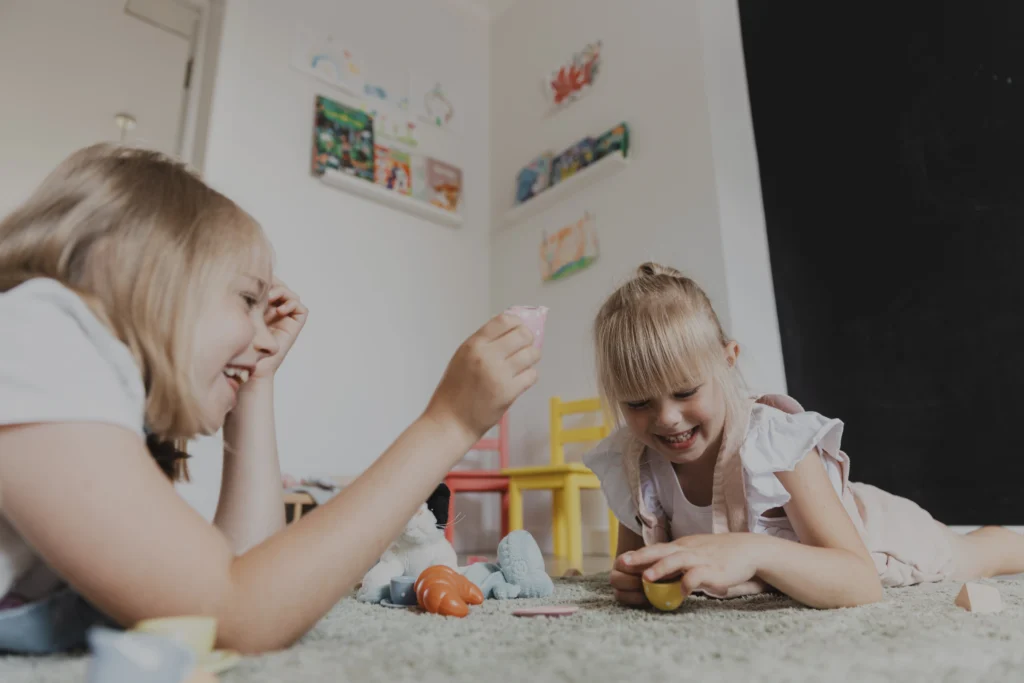
Introduction In the modern busy and screen-heavy society, a lot of the parental concern is whether what they are doing actually aids the child in her growth. It has been common to view play as a relaxation of learning, however, neuroscience proves otherwise. The way a child develops her brain is through play, arranges the feelings, and creates social cognition. Parents who participate with their children in the process of play will have a direct influence on shaping the brain development. This blog will discuss neuroscience of play, Child Development Specialist role, and advantages of mindful parenting on child development in simple Toddler Activities. What Is the Science Behind the Neuroscience of Play? The normal mode of learning in the brain at an early age level is play. During play, several brain areas are used simultaneously, which include the areas involved in emotion, attention, language, and making decisions. A neurological point of view states that play assists children: A Child Development Specialist considers play as hard work on the brain and not leisure. The Value of Play as a Whole Child Development Is Necessary Play benefits the Holistic Child Development both emotionally, cognitively, socially and physically. Emotional Regulation Pretend play in activities and movements help children to express and cope with emotions such as fear, excitement, and frustration. Secure Parent-Child Bond Directed play develops stronger attachment when the parents engage in the play without dictating it. Cognitive Growth and Language Growth Problem solving, creativity and vocabulary building is promoted with open-ended Toddler Activities. Social Skills Development Play also teaches cooperation, empathy, and turn-taking and communication, skills which are essential in the long run relationships. Stress Reduction Neuroscience play reduces stress hormones and helps to have a more relaxed and balanced nervous system. These are some of the advantages of being a mindful parenting parent to a child. Essential Building Blocks of Brain-Healthy Play Toy prices and lessons are not necessary to play well. The quality of interaction is what matters. Core elements include: The principles are in favor of the Holistic Child Development of children and are widely suggested by Child Development Specialist experts. The Interaction of Play Between a Child and His or Her World Entering the world of the child through play does not need effort but will. These actions strengthen attachment and augment the advantages of mindful parenting towards child growth. Popular Problems and Dynamics of Parents Intruding on play is one of the most typical errors and inhibits creativity. The other one is playing with a phone, undermining emotional attachment. Parents can also be concerned only with the organized Toddler Activities and ignore imaginary or sportive games. The antidote is focusing on presence, simplicity and emotional bonding and not performance. Child Development and Play: Future Trends Neuroscience-informed parenting is gaining growing importance within the modern thinking of child development. Current trends include: Families are increasingly seeking advice over Child Development Specialist to help in emotional and neurological development as opposed to acceleration of development. Will You Be Ready to Support Your Child Through Play? To develop such things as emotional intelligence, brain growth and confidence in your child, the first step begins by sharing their world. Play is not subsidiary to development on the contrary it is development. Casual, communal interactions of play form the best premise to lifelong learning and resilience. Conclusion The neuroscience of playing is clear as children flourish through interrelation, rather than stress. When parents play attentively, they are supportive on emotional regulation, cognitive flexibility and secure attachment. The positive outcomes of mindful parenting to the Holistic Child Development is much more than childhood, as it determines the way people learn, relate, and cope in life. Using the noble principle of play as a key to understanding, families contribute to a truly holistic development of a child, one moment at a time. FAQs What is the role of play in the development of the brain? The use of play mobilizes several brain regions at the same time, enhancing neural adaptations of emotion, problem solving, language and self-regulation. What does a child development specialist say about the issue of play? The Child Development Specialist promotes brain-nutritious emotional play that is child-driven and emotional. Do structured toddler activities out perform free play? The two are practical, but free play is crucial in creativity, emotional expression and independent thinking. What time is the right amount of time to be spent on playtime? Even 15–20 minutes of an entire, distraction-free play every day can be highly beneficial to development. What is conscious parenting in the play? Mindful parenting is the act of being emotionally available, leading the child in the direction they want and attentive in relationships and not correction.
How to Start Your Child’s Day With Presence Instead of Pressure

Introduction The most stressful time of the day for my family is usually the mornings. The need to hurry up to get dressed, constant reminders, and angry emotions may leave both parents and children exhausted even before the day starts. These are the moments that are more important than we know to the conscious parent. The manner in which a child is introduced in the morning gives the general mood of the whole day. This blog discusses the way mindful parenting can help the parent replace pressure with presence, the positive impacts of mindful parenting on child development, and how people can change mornings into smoother and more relational ones by using positive discipline techniques with their toddlers. What Does Presence In the Opening of the Parent Day Mean? Presence in the morning is about putting emotional connection first then being productive. Mindful parenting does not emphasize on being task-oriented but rather on the feelings of a child in the morning. This approach works by: To the conscious parent, being can be a source of relaxation, rather than a postponement to productivity. The Importance of Presence to Child Development The presence-based mornings bring advantageous development. Helps in Control of Pages Relaxing and regular mornings help the children control emotions about the day better. Builds Secure Attachment Frequent expression of emotions provides emotional attachment which is a main advantage of mindful parenting that promotes children development. Reduces Power Struggles Children tend to go with the flow when they are not pressurized. Rewards Good Deed to Be Done Toddler strategies of positive discipline are effective when the child is emotionally regulated. Enhances Paying Attention and Faith Children that come to the day relaxed are more attentive and resilient. All these advantages spread far beyond the morn. Essential Building Blocks of a Peaceful Morning Method Mornings that are presence-based are established on several key factors. Key components include: These aspects concur with mindful parenting and positive discipline approaches to toddlers. Presence: Step by Step on How to Start the Day You do not need to re-organise everything immediately. Small shifts matter. The measures would enable the incorporation of mindful parenting within daily mornings. However, There Are Frequent Difficulties and Errors One of them is the temptation to want instant results. Presence takes practice. The other difficulty is that the pressure may be reverted to, thus letting serenity slip through the fingers when it comes to being late. There are parents who mislead positive discipline in permissiveness leading to losing boundaries. The answer can be seen in being consistent and having compassion at the same time trying to remain emotionally present despite the maintenance of limits Trends in the Conscious and Mindful Parenting in the Future Parenting styles are moving towards emotional wellbeing and not control. Emerging trends include: Outside source: Harvard Center on the Developing Child developingchild.harvard.eduResource of the internal interest: Educating yourself on mindful parenting practices/resources/mindful-parenting This Is Ready to Change the Numbers in How You Start Your Mornings In case there is tension in the mornings, presence can be the missing ingredient. Even minor and planned efforts will be able to transform the emotional atmosphere of your house and day of a child. Conclusion Taking the moment to present yourself with your child rather than pressuring them in the morning is an effective way of mindful parenting. Mornings will become a chance to establish emotional security rather than emotional stress on the conscious parent. Whether children experience a sense of calmness, connectivity, and support during the early days of the day can be seen as the primary benefits of mindful parenting concerning child development. Positive discipline on toddlers and leading with presence would enable the parents to establish mornings that would help in cooperation, regulation, and confidence. Harmonious mornings need not be faultless but just purposeful and recurrent. FAQs How will both morning and evening mean the same thing: to parent? It implies emotional integration and relaxation followed by work or time- plans. Will this be appropriate with toddlers who do not like routines? Yes. The positive discipline approach towards toddlers focuses on the strategies of empathy, consistency, and reconciliatory boundaries. What time will a relaxing morning exercise require? Such details as conscious presence will help even 15–20 minutes a day can be significant. What if I’m running late? Waste no time, cool the burnt and come back to track. A one-morning fervor is ten thousand years away. How soon will I see changes? It is observed that after one or two weeks of regular practice in most families; mornings tend to be calmer.