

The Mindful Morning Routine: Starting Your Child’s Day With Presence Instead of Pressure

Introduction Mornings are a problem: rushed and tense-reminders to many families are more like demands, and the emotional state can be unstable even before the day can start. This daily stress may foreshadow an out of control behavior that takes children to school and parents to work. The alternative way is mindful parenting. Mornings can get down-grounding rather than being stress-inducing by taking things more slowly and making them more present. This blog talks about how the conscious parent may create a mindful morning ritual and how a conscious parent may apply conscious parenting strategies within the household, and how calm mornings may help kids in emotional control during the day. How to Have a Mindful Morning Routine Mindful morning routine is a quiet, predictable morning routine which gives importance to connection, as opposed to control. Instead of making things out of time, it is concerned with: To the conscious parent, it would be better to use mornings to help emotional control a kid rather than it being an obedience test. The Importance of Mindful Mornings to Emotional Regulation Kids The nervous system of a child is strongly affected during the first hour of the day. Sets the Nervous System Tone Stress hormones decrease in the calm mornings and help to balance emotions in children. Lessens Power Wars in the Mornings Routine activities are predictable and mindful, which is a valuable factor to decrease resistance and emotional outbursts. Enhances Parent–Child Bond Conscious parenting establishes pre-separation day trust. Improves Focus and Learning Children that begin calmly exhibit fine attention and bigger emotional resilience. Donates to the Conscious Parent Too Mornings become purposeful which helps parents feel less responsive to them and more in-touch. The needs radiate throughout the day. Essentials of a Mindful Morning Routine Considerate mornings are constructed with care and not excellence. Key components include: These aspects demonstrate how to introduce conscious parenting styles at home not being overwhelmed. The Procedure of a Mindful Morning Routine Step by Step You do not have to go over and reform everything. Start small. This activity enhances emotional control of children by being consistent. Popular Obstacles and Errors Attempting to be perfect in the mornings at night is one of the mistakes. Another one is still multitasking which is disruptive to presence. Other parents fall back to pressure when they are running behind, derailing the relaxing atmosphere they have created. Progress over and not perfection is the solution, so to get back to the purpose of being again, after a hard morning, it is a soft, gradual process. Trends in Future Mindful Parenting and Morning Routines Families are more and more appreciating the role of daily rituals. Emerging trends include: An outside source: Harvard Center on the Developing Child – developingchild.harvard.eduInternal resource: Get acquainted with mindful parenting – /resources/mindful-parenting Get Ready to Change Things in the Morning In case mornings have become an uphill battle, a few minor modifications may pack significant changes. A serene morning makes a serenity of days–to children as well as to parents. Conclusion The conscious parent has a tool that is most beneficial in its ability to provide a mindful morning routine. Parents use presence rather than pressure at the beginning of the day to enable the emotional regulation in children, prior to the occurrence of challenges. Morning mindfulness creates productive trust, resilience and day-long emotional safety in parents. There is no specific standard one has to be perfect when learning how to employ techniques of conscious parenting at home simply because one has to intend. Mornings This can help to change mornings into a peaceful bond, not a time of stress, and create healthier emotional patterns in the entire family. FAQs What is the recommended duration of a consciously morning routine? Even 20–30 minutes of non-stressful and predictable routine could help to control emotions among kids. But what in case my child is not compliant with the routine? Resistance is normal. Be gentle, steady, and have an emotional presence instead of compelling others to do something. Is mindful mornings applicable to working parents? Yes. The time length does not count as heavily as a simple ritual and emotional presence. Is morning time the time to stay off the screen? Minimizing displays helps decrease nervous systems and enhance concentration. How soon will I see changes? With some practice, many of the families observe better mornings in a one or two week interval.
Helping Parents Design Calming Sensory Environments at Home
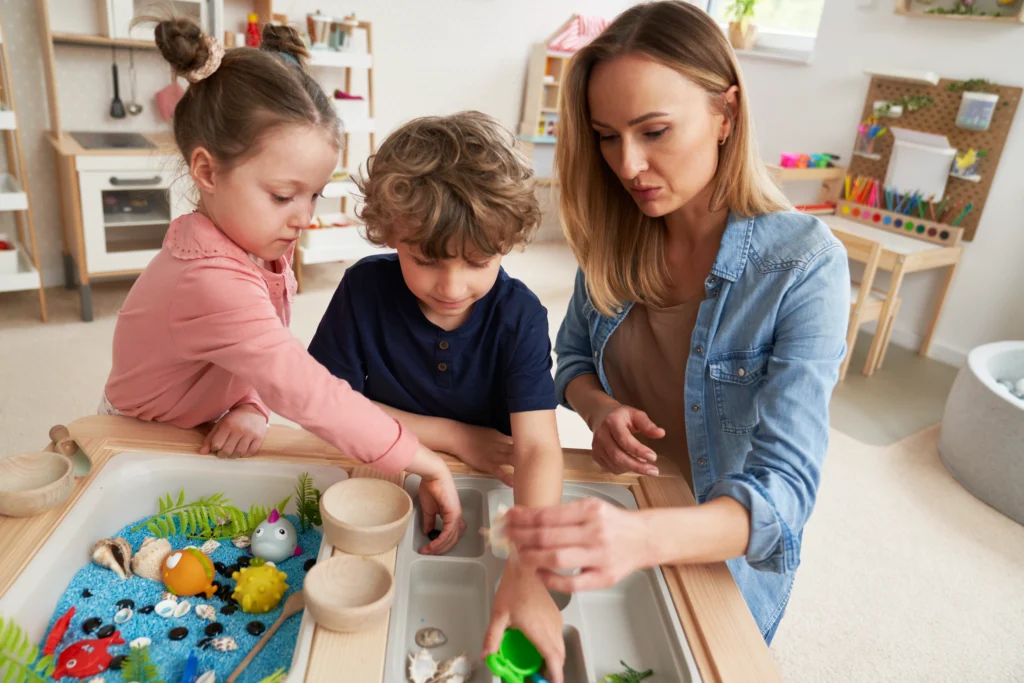
Introduction Most parents realize that their child is getting too whiny, distracted or overwhelmed at home when no obvious thing seems wrong. Very often, it is not the behaviour but the environment itself. Excessive stimulation and mental hyperactivity (noise and clutter and screens, etc) can covertly destabilise the nervous system in a child. Creating a relaxing sensory environment is an effective method of promoting Holistic Child Development. This blog states why sensory environments are important, the significance of mindful parenting to child development and how to adopt conscious parenting methods at home using toddler activities that are simple and even daily. What Definition Does the Term Calming Sensory Environment Have? A calming sensory environment is a place that helps to bring emotional balance through the regulation of the hearing, sight, movement and touch of a child. It works by: These environments are rather based on balance as a crucial component of the comprehensive child development instead of introducing stimulation. The Importance of the Sensory Spaces to Children Home environment significantly contributes towards the feeling, behaviors and learning of children. Facilitates Emotional Control When the environment is safe, children can control with a lot of ease. Improves Focus and Learning Less sensory noise assistance will make children focused during play and during toddler activities. Promotes to Play on Their Own Relaxing environments encourage exploration that does not involve a close adult supervision. Enhances Child-Parent Relationship It is possible to have more responsive and less reactive interactions because mindful parenting is possible only in calm environments. Builds Long-Term Resilience Balanced sensory input favor emotional as well as cognitive development with time. Such are the important advantages of mindful parenting on child development. Basic Elements of a Relaxing Sensory House To make a home a calming environment, one does not have to redesign the whole house, little things are the most important. Key components include: These aspects help in the wholesome upbringing of kids by ensuring that they satisfy the sensory needs in a gentle manner. The Steps to Apply Conscious Parenting at Home Creating a sensorial house is a gradual process. These actions explain how to apply conscious parenting practices within the family in a realistic and sustainable manner. Usual Problems and Errors One of the mistakes that are made is thinking that more toys or stimulation will enhance development. In actual sense stress is usually increased by over stimulation. The other problem is the duplication of the sensory arrangements without taking into consideration the needs of a child. The screens are over dependent with some parents that may have dysregulated the small nervous systems. The answer lies in observing, simplifying and being deliberate instead of the surplus. Trends in Future Sensory-Aware Parenting The mothering style is getting more environmentally oriented. Emerging trends include: External source: Harvard Center on the Developing Child – https developingchild.harvard.eduInternal source: resources Explore mindful parenting resource – resources/mindful-parenting Are You Ready to Make the Home of Your Child Calmer? Even little environmental changes can provide an impact of a great change in the emotional world of your child. Relaxation areas encourage relaxed minds – and relaxed parenting as well. Conclusion One of the best methods to facilitate whole child development is the designing of sensory calming environments. Considering that children feel secure in their environment, emotional control, concentration, and self-confidence can develop naturally. This has been found to be especially important when the environment does not act in opposition to the nervous system of the child, but cooperates with it. Parents can provide an atmosphere of peace, closeness, and development by learning how to apply conscious parenting methods at home and by selecting thoughtful toddler experiences each and every day. FAQs What is a sensory environment that is relaxing? It is a place that is intended to make the child feel safe and in control, as well as, to make children feel emotionally safe and controlled. What does this contribute to holistic child development? Emotional, cognitive, physical, and social development occur jointly on the basis of balanced sensory input. Are relaxing surroundings suppressive to creativity? No. They in fact increase creativity by overloading less and helping to concentrate. Do toddler activities matter in regard to sensory regulation? Yes. Movement, touch, and repetition activities help a toddler to control the emotions and contribute to learning. What role is mindful parenting in sensory design? Mindful parenting focuses on observational, presence, and emotional parenting and it uses the atmosphere to construct the child.
How Rhythm and Predictability Support Regulation and Peace in Your Home
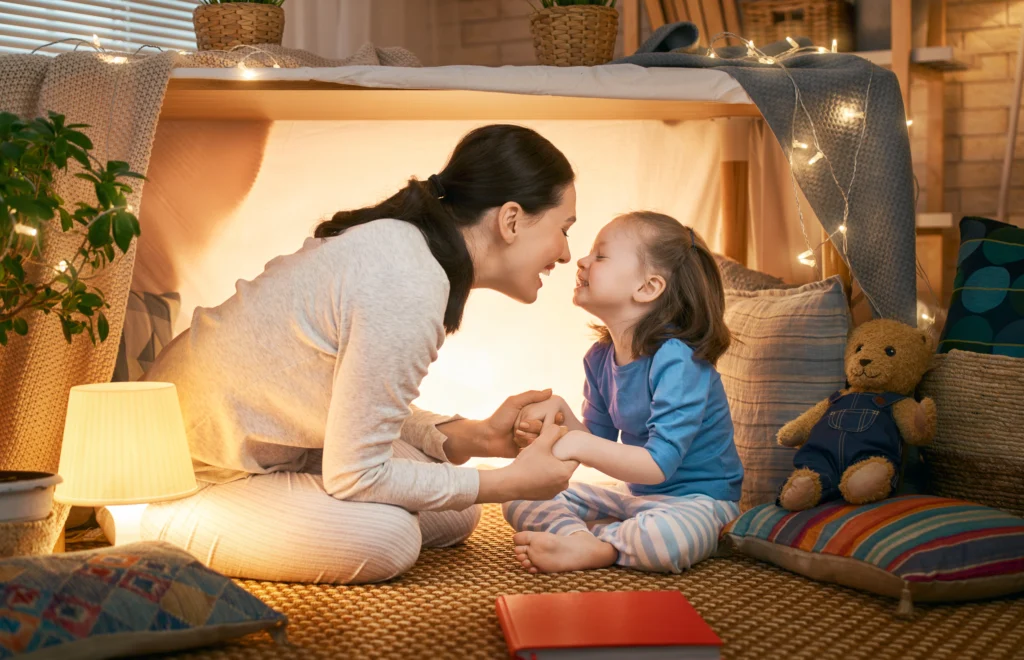
Most households are very hectic, responsive, and emotionally taxing- particularly in cases where children have a problem with big feelings. There is a tendency among parents who experiment with more regulations or more activities but still, the state of calm remains unachievable. Child development studies indicate that the best regulation occurs in a child when the background seems predictable and safe emotionally. Here mindful parenting will be effective. With the introduction of regularity and stability, families facilitate emotional control in children and make them the background of an integrated child development. This paper will discuss why rhythm is needed, how it functions and how the conscious parent can use rhythm as a way of establishing peace in the home. Rhythm and Predictability in Parenting: What Are They and How Do They Work? Rhythm and predictability are the terms used to refer to the monotony and repetition on which the day and emotional world of the child are based. Are these schedules not strict structures in mindful parenting, rather than assuring cues of safety. Rhythm will favour regulation in that it: To the conscious parent, rhythm is a means of being connected rather than being controlled. The Reason Why Rhythm Is Crucial to Regulating Emotions in Children Children learn to regulate their emotions when they are in their environment and then they can do it by themselves. Nervous System Safety Routine activities assist in stopping the stress response, and emotional regulation becomes more available among children. Less Meltdowns and Power Struggle With understanding of what to anticipate, both anxiety and cooperation are lowered. Better Parent-Child Relation Being mindful in a predictable rhythm will enable the parents to be responding calmly as opposed to the emotional response that is triggered. Endorsing the Holistic Child Development It favors emotional, cognitive, social and behavioral development- not only the discipline. Improved Sleep and Focus Rhythm enhances sleep quality and attention which is very necessary in healthy development. Such advantages are directly geared towards child development in the long run. Fundamental Elements of a Restful, Relaxing House A harmonious domestic setting is maintained by simple, repetitive aspects and not perfection. Key components include: To the conscious parent, these elements bring about stability that is not rigid. The Practicing of Rhythm and Predictability The development of rhythm is a step-by-step, premeditated process. The practice empowered parenting and self-control among children. Popular Problems and Errors An obvious error is the distraction of rhythm with strict control. Excessive scheduling is usually a higher cause of stress instead of decreasing it. The other problem is the inconsistency among the caregivers and this breaks the predictability. Other parents will give up on routines when there is disruption rather than coming back to it in a gradual manner. The way out will be flexibility in structure and taking emotional safety over perfection. Future Future Trends in Mindful Parenting and Child Development Neuroscience and emotional wellbeing are also turning into the leading guides on the methods of parenting. Emerging trends include: Outside source: Harvard center on the developing child – https://developingchild.harvard.eduObtained internally: Find out more about mindful parenting practices – /resources/mindful- parenting Have You Had Enough of the Stress at Home? Whether your home is reactive or not, the missing element might be considered to be rhythm. Even minor and regular adjustments may benefit emotional security and a sense of connection significantly. Mindful parenting is all about predictability and not about perfection. Conclusion Drum beating and predictability are good instruments of peace making at home. To the conscious parent, they provide an approach of supporting emotional control in uncontrollable and unpressurized kids. Children are able to concentrate on growth and not survival as long as everyday life is stable. This stability eventually leads to child holistic development, in terms of emotion, social, and cognitive development. Mindful parenting or a rhythmic approach to parenting enables families to make their homes easier and their children stronger one predictable moment at a time. FAQs What role does rhythm play in emotional control of kids? Anticipation alleviates stress, and makes the children feel secure, emotions are able to be handled without being overwhelmed. Is conscious parenting equivalent to intense routines? No. Mindful parenting is based on emotional protection, integration within format, rather than strict timescales. What would happen in case routines are changed? Disruptions are normal. Going back to rhythm with no guilt and slowly assists to regain control. Is rhythm effective with older children? Yes. Regularity helps them to control their emotions and concentration at any age. The time lag between routines bearing fruits to us? Calmer behavior is observed in STG as a result of consistent practice with two to three weeks after observation.
The Role of Sensory Experiences in Early Development: Designing Calming Environments
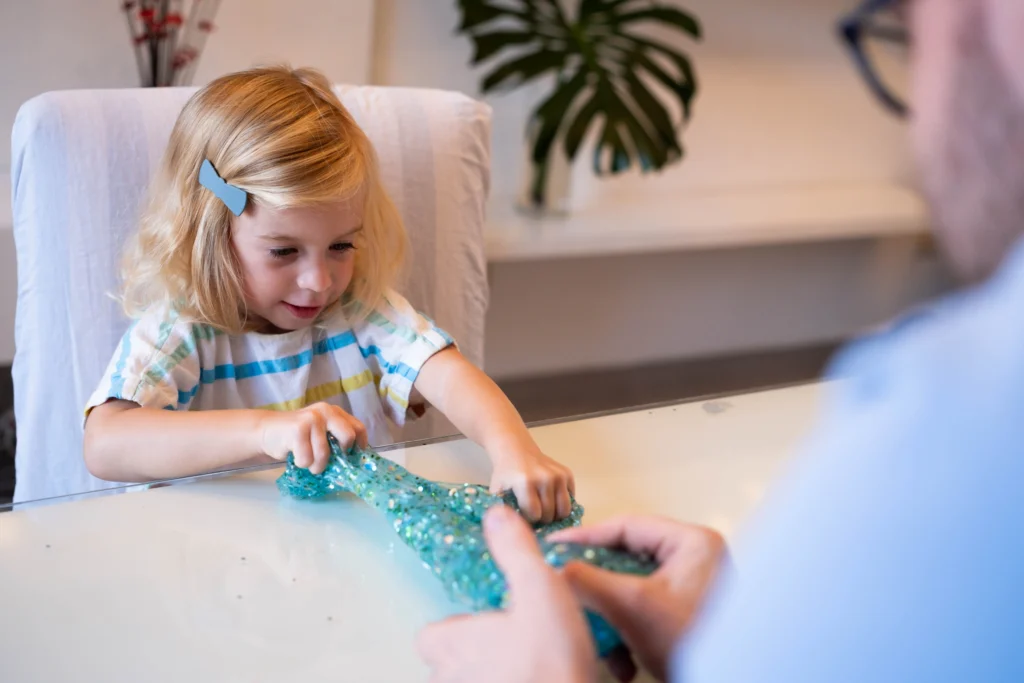
Most parents will find their child overwhelmed, restless or emotionally reactive without having any idea as to why. Very often, it is not a behavioral cause but sensory trauma or sensory assault of the senses. Early childhood development is closely tied with the way in which children learn to interact with their society by visual and sound perceptions, tactile ones, movements, and smell. A Child Development Specialist realizes that emotional regulation and learning is directly related to sensory input. The purpose of this blog is to address how sensual experience contributes to child development in the early stages, how this notion can promote the development of the child as a holistic being and how mindful parenting can be used to provide the child with a relaxing atmosphere based on simple activities of the toddler. Early Developmental Sensory Experiences: What Are Sensory Experiences in Early Development? Children take in and process information about their surroundings by way of sensory experience. These experiences influence the development of the brain, the emotional regulation and the learning patterns. Sensory input includes: A Child Development Specialist considers the sensory interaction to be the key to healthy neurological development particularly during the initial years. The Holistic Child Development Involves the Importance of Sense Experiences in Child Development The senses are not secondary concepts that are added on board development. Aids in Forming Affective Cocktails Sensory balance makes children relax their nervous system and overcome large emotions. Enhances Brain Development Sensory stimulation enhances neural links which aid concentration, memorizing and learning. Improves Focus and Behavior Properly exposed children in terms of sensory input are in a position to focus and participate in their activities. Develops a Body Awareness and Develops Confidence Activities of movement of the toddler promote coordination, balance and self-trust. Enhances Parental-Child Interaction Emotional safety and trust are developed in mindful parenting in sensory play. The advantages are significant to the Holistic Child Development process. Central Elements of an Apartment With an Appealing Sensitive Space Creating a relaxing atmosphere does not presuppose the use of costly tools. It involves willfulness and directness. Key elements include: Before being stimulated, a Child Development Specialist will tend to suggest environments that facilitate regulation. The Regulation With Support of the Sensory Experiences: Step-by-Step A relaxed sensory atmosphere may be built up. This is a process that promotes emotional stability and education. Observable Problems and Errors It is often mistaken that the more stimulation there is the better the development. Due to overload, stress and dysregulation may escalate. The other obstacle is not taking cartoon-level attention to the special sense requirements of a child and imitating standard activities. Other parents are overdependent on screens that overstimulate the nervous system. The answer is to monitor the child, to make the environment less complicated, to manipulate the sensory input on purpose. Developmental Future Trends in Sensory Child Development The art of child development is increasingly becoming sensorial. Emerging trends include: External source: Harvard Center on the Developing Child – Harvard. Developing childInternal source: Find out more about mindful parenting strategies – /resources/mindful-parenting Desire to Make Your Child Be in a Safer Place? Even minor alterations in the environment of a child can produce significant changes in the emotional regulation and behavior. Creating a sense thoughtful house contributes not only to tranquility but to concentration, concentration, and togetherness. Conclusion Nonverbal senses are significant at the early stages of development. Children are able to feel safe enough to control their environments, explore and be able to learn when the environments are relaxing and purposeful. A Child Development Specialist is aware that the development of a child requires balanced sense stimulation, but not continuous stimulation. Families can create the space that will sustain emotional wellbeing and development through conscious parenting and selection of activities that toddlers can engage in. Tranquil surroundings breed tranquil personalities and that is for life. FAQs What influence does use of sensory experiences have on the development of the brain in early stages? At the early childhood stage, sensory input reinforces neural connections that facilitate emotional regulation, attention and learning. Among child development specialists, what is the role towards sensory development? Child Development Specialist assists in the discovery of sensory needs and provides suggestions of environments and activities that promote regulation and growth. Is it necessary that toddlers have sensory activities? Yes. Movement, touch, and sound activities during the toddler age assist in the development of the brain and emotional stability. Is it possible to have excess sensual stimulation? Yes. Overstimulation may cause stress, anxiety and behavioral problems particularly among young children. What role does mindful parenting have in sensory regulation? Present, observant and emotionally safe, mindful parenting is focused on the experience of exploration as kids acquire sensory experiences.
The Power of Routine in a Conscious Home: How Rhythm and Predictability Support Regulation and Peace

Introduction Numerous homes are hurried, jumpy, and emotionally clamorous. Parents desire a relaxed day although days tend to get out of control far into battles and exhaustion. It has been found that with a predictable life in children, they control themselves better. Routine is not controlled in the case of the conscious parent, it is a matter of security. When rhythm takes the place of the disorder, the children are kept in place, noticed, and stable. This blog describes the role of routine in helping kids regulate their emotions, the benefits of conscious co-parenting with regard to shared structure, and how the methods of conscious parenting can be practiced at home and remain flexible and non-oppressive. Routine and Meaning of Home Consciousness Routine in conscious parenting does not involve schedules. It deals with emotional rhythm and predictability which enable children to feel safe. In a self-aware routine there will be: To the alert parent, routine facilitates regulation through decreasing uncertainty and straining the nervous system. Why Routine Matters When It Comes to Emotional Regulation of a Kid Routine has a direct impact on the brain and body of the child to deal with stress. Forming Nervous System Safety Uncertainty decreases anxiety. Children are able to have their bodies relax and regulate their emotions when they are aware of the next thing. Reduces Power Struggles Proper schedules eliminate the negotiation that is an ever-present irritant, and parents remain at ease and connected. Proclaims Emotional Intelligence Children get to learn to expect transitions, and it is easier to process emotions without being overwhelmed. Enforces Conscious Co-Parenting When the two caregivers observe the same rhythm, children get a regularity in emotional communication. Develops Autonomy as the Years Pass Monotony is the process that helps children to internalize order, which helps to feel confident and be self-regulated. These advantages are the main focus of emotional control among children and long-term health. Basic Building Blocks of a Conscious Routine Good routines are not so strict and so malleable. Key elements include: To have conscious co-parenting, the components obstruct mixed messages and emotional confusion. The 7 Conscious Parenting Techniques and How To Learn Them at Home It is not necessary to be perfect to build a routine just to be intentional. These are the actions taken to follow the conscious parenting techniques at home in a sustainable manner. Widespread Problems and Lapses Routine and rigidity are swapped about by many parents. The effect of over-scheduling is adding stress rather than relaxation. The other error is inconsistency among the caregivers which undermines emotional safety. Other parents do not resume patterns during disturbances, but start afresh in a manipulative way. Flexibility within the structure and effective communication in conscious co-parenting is the solution. Trends of Conscious Parenting and Home Rhythm in the Future Modern families are shifting to rhythmic lives as opposed to timetables. Emerging trends include: These transitions help in controlling emotions of children and do not oppose family living now. External source: American psychological association routine and child wellbeing – http://long.apa.orgInner source: A guide to mindful parenting family practice – /blog/conscious-parenting-basics Would You Like to Make More Peace at Home? Routine can be like the lack of background scenery in case your home is reactive. Begin with something manageable, be regular and aim at emotional safety, as opposed to perfection. Half-awawed practices make children and women calmer. Conclusion One of the most potent instruments that the conscious parent has is routine. Children are secure enough to manage, associate, and to develop when there is rhythm and predictability. Conscientious conscious co-parenting works where both parents are determined to take up common routines and emotional regulation among children will improve with time. Teaching on how to practice conscious parenting at home entails less controlling and more about establishing a stable emotional climate at home. In soft regularity, routine is the silent power that promotes peace, bondage and stability. FAQs But what is the role of routine in the emotional regulation of kids? Routine also decreases uncertainty thus relaxing the nervous system. The predictability will enable the children to be able to process emotions without the fear of the unknown and feeling stressed all the time. Are schedules and routines similar? No. Routine is conscious and is based on rhyme and even security, and not on strict time or excellence. What is the way conscious co-parenting promotes routine? When there is a shared sense of expectations and responses amongst caregivers, a child would experience the same type of emotional signal, which enhances trust and control. What in case of breaks of routine because of travel or sickness? Disruptions are normal. Get back into normal without blame or chastisement. What is the length of time taken by routines to work? Families with age-regressed eating disorders recover within 2–3 weeks of steady and non-disturbing introduction.
Viewing Defiance as a Developmental Milestone, Not Disobedience
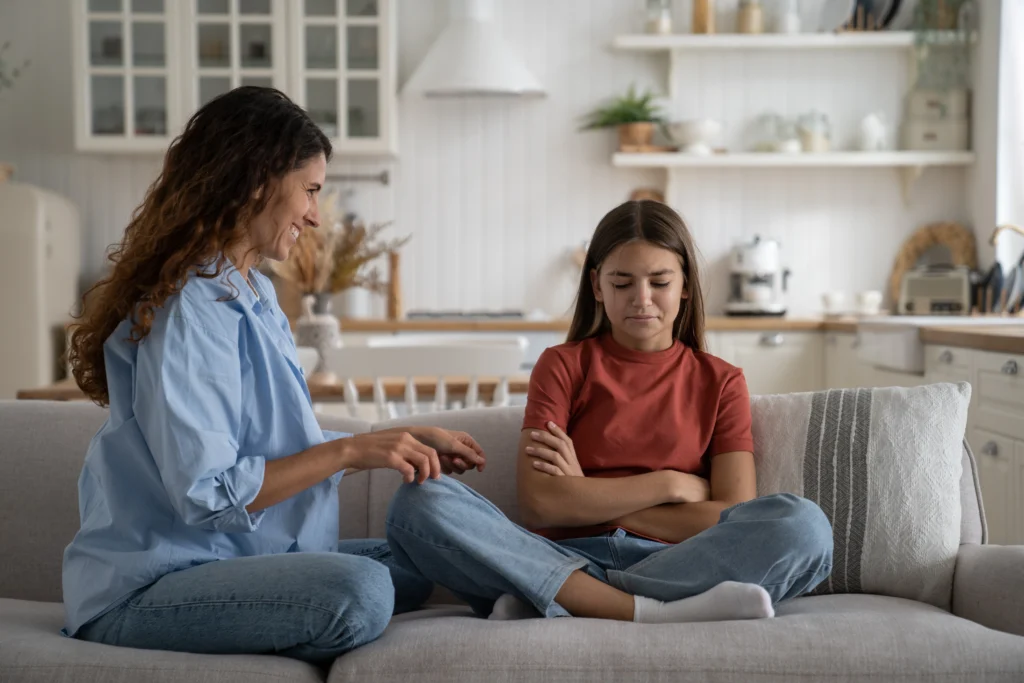
Introduction All parents face instances when their children are not listening to them, but they are arguing or even saying no. Although it may seem rebellious, what is it that we grow into? Applying these behaviours to conscious parenting will allow parents to view such behaviours not as a creation of disobedience but as the indication of emotional and cognitive progress. The blog discusses how healthy resistance can be a connector, agent of independence and equilibrium during the early childhood stage. Why Revolution Is Not Necessarily Deviancy. As a child development specialist, I can tell that defiance is manifested in most cases as an emerging individuality and not rebellion. When children say no they are learning to have their preferences, push limits and realize their feelings. The rebelliousness exhibits the emergence of individuality and judgment. It is an indication that a child is confident enough to disagree. Under proper guidance, it builds trust between a parent and child. It all depends on how parents perceive and react instead of oppressing and penalising, but instructing and modelling emotional maturity. Regulating Emotions in Children: What is Going On? Young children are still in their early stages of the nervous system; their brains are still developing how to handle such large emotions as anger, frustration and disappointment. Kids need time to be patiently modelled with regard to effective emotional regulation. Parents can: Be attentive to the feelings of the child (I can see that you are upset). Make them describe what they are feeling. Regulate rather than reacting – first get your own balance, and then help them get back to their balance. Feeling noticed allows children to absorb the concepts of calmness and empathy, which are essential in the process of emotional health in the long term. Respectful Parenting and Positive Discipline. Control is a characteristic of the traditional discipline, and respectful parenting is characterised by collaboration. Parents can be able to create boundaries through positive discipline methods among toddlers without damaging the child spirit. Some examples include: Applying redirection, as opposed to punishment. Presenting a few options (Would you like to have your shoes put on now, or in two minutes?). Strengthening the good behaviours with sympathy instead of fear. Structure and respect may go hand in hand. Boundaries made firm and kind enhance accountability through accountability by connecting rather than complying. The Conscious Parenting at Home. It is not about being an ideal parent. It’s about being a present one. The following is the way of how to implement conscious parenting techniques at home: Think before acting – have yourself under control. Instead of saying Because I said so calm them down with explanations. Control is not an opportunity to teach, use misbehaviour. Ask yourself every day what the behaviour of your child could be saying. Once a child feels emotionally safe, he does not fear to be corrected, he learns to be corrected. Why This Shift Matters The perception of defiance as a child developmental milestone changes an outlook of power struggles to emotional team-building in parenting. When directed with conscious awareness defiance turns into dialogue. With time, it develops resiliency, compassion and interrelationship, i.e. the qualities of an adult of empathetic intelligence. Conclusion It is not about having good kids but it is about having human beings who know themselves. Through conscious parenting that encourages emotive control of children, rebellion is changed into maturity. What appeared to be rebellion turns into reflection, a learning, but not punishment. No can only result in further insight should one be patient and respectful. Follow Vedandi Brahambhatt on Instagram and YouTube, for daily insights, mindful parenting tips, and expert guidance on raising emotionally balanced children. FAQs What is the difference between disrespect and defiance?Disobedience is investigative – a method of making a claim. Disrespect is however a learned behaviour or the lack of emotional needs. Context matters. How does a child development specialist deal with defiance?The specialist assists parents to realise the emotional cause of behaviour and give personalised approaches to direct without blaming or punishing. What are the strategies of positive discipline that I can use?Hold specific and steadfast boundaries and speak serenely. Instead of punishing through fear, emphasize on cause and effect. Are emotional regulation skills acquired by toddlers?Yes. Children can learn best by modelling, when the parents control their emotions, children imitate it of their own initiative. Which is one easy conscious parenting practice it is possible to start today?Pause before responding. Such a realisation is useful in making you act deliberately rather than automatically.
Understanding The Neurobiology Of Fear And How To Create Emotional Safety.

Not only is fear an emotion, but it is also an evolutionary reaction that causes us to feel secure. Long-term fear however restructures the manner in which the brain processes trust, attachment and stress in the case of children. Being aware of the emotional safety, family meeting, and using nonviolent communication to resolve family conflicts, parents and caregivers may learn to create emotional safety that would provide children with confidence, calmness and safety. What Happens In The Brain When Fearing. When the amygdala is triggered by the evocation of fear, it sends fast signals to the nervous system. The stress hormones like cortisol and adrenaline are the ones that prepare the body to fight, run or freeze. Repeated stimulation of this system in children is potentially overstimulating of the amygdala and disabling other parts of the brain like the prefrontal cortex that regulate emotion and sympathy. This is what causes the children to be either withdrawn or to lash out when there is a conflict at home since the brains of the child are still programmed to fight and not think. Emotional safety may be one of the means of regaining the sense of calmness since it triggers the aspects of trust, empathy, and problem solving. What Is The Significance Of Emotional Safety In A Family. The child brain does not learn in the form of lectures but patterns. The neural pathways that are linked to safety are reinforced under the condition of the consistency of warmth and predictability. The children are facilitated emotionally: It is not possible to manage conflict using aggression. Be true to oneself and not suppressed. Acquire a sense of security with parents and friends. It is anchored on these pillars of a supportive family – the one that transforms the tension into teamwork. The Power of Family Meetings Family meetings are one of the most appropriate ways of restoring sanity after conflict. They allow them both to express feelings, overcome misunderstandings and build confidence. Family Meetings Tips Choose a free time and place where everybody will be free. Let the members take turns. Conclusion, action principle – not fault. These minor yet frequent examples show the children that their emotions do not go unnoticed and that wrongdoings are corrected followed by forgiveness as opposed to being punished. How To Negotiate Conflict Through Nonviolent Communication. The initial step of using nonviolent communication to resolve family conflicts is solving the conflict resolution kids situations through empathy. Parents are the role models of the calm tones, open questions and reflective listening. Instead of asking why did you do that? make an attempt namely Can you explain what you were going through when it happened? The process restores the circuits of the stress response to the brain as less responsive and more interconnectional. With the passage of time, it will teach children that the only safe way to express oneself is to have a calm conversation and an answer or solution can be reached. Practical, Conscious, and Transitional Parenting. Parenting with intentionality is not about following but leading. Parents monitor their stimuli, take breaks and tone down their feelings. Nonverbal cues, like lowered voice, paralinguistic confirmation, or even a small caress, would be more effective than conversation to make someone feel secure. Being there is not about being perfect. A carefree parent will create a careless nervous system in the entire family. Conclusion Neurobiology of fear explains that children would not act wrongly due to malice rather they react in a survivalist way. The families are able to replace the reactivity with the reassurance using the family meetings, empathy and purposeful parenting. Emotional safety instils connection and resilience and converts fear to connection, therefore, the supportive family. FollowVedandi Brahambhatt on Instagram and YouTube, for daily insights, mindful parenting tips, and expert guidance on raising emotionally balanced children. FAQs What is the neurobiology of children’s fear?It is the manner in which the brain responds to threat which is the release of stress hormones which affects learning, memory and emotions. How can family meetings help to solve conflict?They offer a safe space to each voice and are able to help family members to express emotions, build trust, and create a certain understanding among them. Nonviolent communication, what does that mean?It is another type of conflict management that is founded on empathy, listening and non-criticising as well as non-blaming expression. How can intentional parenting bring sanity to the family?Thoughtfully reacting, parents help the children to learn how to control, to be patient, and respectful in case of emotional occurrences. What are the consequences of emotional insecurity in children at an early age?Some of the signs through which a child does not feel safe or heard are that a child can be withdrawn, irritated or even excessive clingy.
Understanding Emotional Mirroring and Using It As A Tool For Self-awareness.

When a child cries, when the child laughs or even imitates our facial expression the child is not imitating someone but he/she is imitating us as far as feelings are concerned. The basis of sympathy and attachment is based on this instinct. The comprehension of this process is a very potent tool of self reflection to the parents. Under the scenario of emotional mirroring, mindful parenting and attachment parenting we shall be able to bring in the emotional mirroring practice as a means of teaching that of regulation, awareness and emotional safety. What Is Emotional Mirroring? The mirroring is the emotional one, which is founded on, according to which children repeat the mood or energy of their caregivers. It is also among the oldest communication media that characterises trust and understanding. The reaction of the parents in the non-violent way is to teach the children that they can safely employ their emotions. This is one of the key processes in the development of emotional regulation in kids and it assists children in determining the emotion being and making duplication between behaviour and emotion. In a way, we are all brothers when it comes to educating our children , even though we are in charge of ourselves. What Is The Significance of Emotional Mirroring? Based on the reflection of the emotions, parents will be capable of seeing themselves reflected in the reactions of the children in the internal situation. When a child is angry or anxious, the child will have the tendency of unconsciously expressing the stress of a parent. The awareness of these tendencies results in the formation of emotional sincerity. Posing your child with the question of what he/she is looking back at you and you will create deeper self-knowledge, the keystone of the nondemanding and understanding parenting. This is the usual growth process that enhances your connection and secure emotional development of the parent and child. What Is Mindful Parenting In Practice? Mindful parenting utilises the idea to be mindful of how you are but not to judge and then act towards your child. You go on a break and inhale and you decide to show empathy rather than lose your temper to get angry because of the tantrum that your child throws. This will not only soothe your child but you will also forget the way to handle stress. Simple Practice Refrain: during the imitation frustration, observe your voice, and the body language. Wait and be patient and make an amendment – draw a breath. When you are happy, share your feelings, and your children. This kind of uniformity creates an emotional balance and inculcates to a greater degree the benefits of mindful parenting for child development through the example. Getting Ready: Reflecting to Be a Good Person. This is not the only instance in which the mirror effect is seen. There is also the sight of games, happiness and interrelation. These tasks that toddlers are provided with such as laughing together and moving together impart on children the internalisation of your happiness and not the stressfulness that you are subjected to. On the same note, the discipline that is reasonable on the toddlers such as redirection, calm clarification, and joint problem solving might assist the kids to realise how correction may be administered without embarrassment. It shows that love and discipline are compatible as in such instances emotional mirroring is available to augment the concept of co-existence of the two. The Long-Term Awareness Building. The attachment parenting practices also ensure that children are not shy to express their feelings as they know that their guardians are able to handle them. These are secure attachments that allow lifetime sympathy and trust. In the case where the parents go through emotional mirroring that they identify as nonresistance and not resistance, then the family process is reciprocal development. It is the source of personal consciousness which exists in such daily thoughts, and will lead to the emotional maturing of the parent and child. The practice enhances holistic development and helps in forming a supportive family through co-regulation parenting principles. Conclusion It is not only a process of development that is involved in emotional mirroring, but it is also a picture of your very soul. It is a curative, connectivity and harmony variable with a relative amount of consciousness and thoughtfulness. When you engage in mindful parenting and are an emotionally intelligent person throughout the process of raising your children you bring up children who do not perceive explosion as a chaotic way of affairs but as a kind of communication. FollowVedandi Brahambhatt on Instagram and YouTube, for daily insights, mindful parenting tips, and expert guidance on raising emotionally balanced children. FAQs What is emotional mirroring with respect to parenting?Children imitate the moods of their caregivers and this is what makes them learn to empathise and feel. And what shall the parents do to implicate themselves?As they observe the reaction of their child, and realise that it is a reflection of their mood. So, what is the significance of mindful parenting?It will assist the parents in responding as opposed to reacting and even the kids will be trained to control their emotions and learn to be understanding. What should I do with the emotional development of my preschooler?Visualise the case of non-violent reaction, free speech, and utilise life as a lesson in general. What are the favourable disciplinary measures applied to the toddlers?Communication, redirection and empathy should be used to promote cooperation and respect instead of punishment.
The Mirror Effect: How Children Reflect Our Inner State

Young children are the best reflections of us. They tend to replicate our behaviour, responses and emotions. Anxious, distracted or relaxed parent passes this on to a child. Parenting is not as much about instructions as any child development specialist will tell you, it is about imitation. The emotional map that our children follow is our stress management behaviour, or love style or boundary setting. Grasping The Mirror Effect. Children learn and then go ahead to observe before they think logically. They receive parental and caregiver messages in the tone of voice, emotional regulation in kids, etc. It is this process that ensues emotion regulation amongst children and they learn to process emotions safely and to portray them in a healthy way. When the parents model them, children will begin to copy the character of being calm, empathetic and problem solving. Conversely, the uncontrolled rage or stress can be translated into reactive behaviour amongst them. The former is the former step to becoming aware of this reflection to make any changes in your own emotional patterns to the advantage of your child. Co-Regulation Parenting: the Co-Regulation Science. The co-regulation parenting style emphasises the point that until children are controlled by an adult, it is not possible to self-regulate. The composure of a parent is the external reference that would be used in learning in order to be stable in times of frustration. Practice Tip Speak in low tones, breathe slowly, and talk calmly when your child cries so you sound steady. This nonverbal guidance helps their nervous system relax and supports emotional learning through lived experience rather than correction over time. Such a reciprocal control is the significant quality of the system of holistic development, the integration of emotional, social and cognitive development of the child. Building of a Supportive Family Ecosystem. The nurturing supportive family is the one that achieves emotional balance and emphasises on empathy, open discussion and reciprocity. It does not escape war but manages it in a prudent manner. The most minimal of the changes like accepting the feelings of your child instead of de-escalating them can create trust. It is supposed to make the children feel secure even during the emotionally high times. This assumption enhances directly the benefits of mindful parenting for child development as it forms secure attachment and resilience at a tender age. The Mindfulness of Parenting. Mindful parenting is not only a practice, it is a philosophy. It is possessing the self-image of your own emotional stimuli and responses and thereafter being the head of your child. When tantrums set in, you do not lose your temper, but watch and respond to them intentionally. By being patient and being present, children will learn that one can handle emotions, though not be crushed by the same. This regularity of self-consciousness in compassion, will be the image of self to self–learn to be strong, as I am. Conclusion We also are reminded of the fact that children not only learn what we say but who we are by the mirror effect. The creation of emotionally intelligent families by parents is two way with the creation of calm empathetic and self aware development. A child development specialist would confirm- what you heal in yourself, your child heals in the outside world. It is the actual holistic development. FollowVedandi Brhambhatt on Instagram and YouTube, for daily insights, mindful parenting tips, and expert guidance on raising emotionally balanced children. FAQs What is the effect of the mirror of parenting?It refers to the interaction of children as they absorb and reflect the emotions, attitudes and styles of coping that their parents have in their lives. What can parents do to better regulate children emotionally?First, by self-regulation: breathing, being a patient listener and empathetic at all times in conflict. What does co-regulation parenting mean?It is the process, thanks to which children learn how to become emotionally subdued by the composing and supportive nature of a parent. What is mindful parenting and its importance to development?It facilitates emotional sensitivity, safe attachment and equitable behaviour of children. How can families be used to encourage holistic development?Through open communication channels, emotional modelling and daily-based practices that assist in building on empathy and stability.
The Brain Under Stress: What Happens When Kids Feel Unsafe

Every child is dependent on the sense of security so as to learn, grow and thrive. But when this security is violated, i.e. through war, screaming, or emotional desertion, the brain enters into the state of survival. It does not just end up being fear but rewiring how children understand emotions, trust other people and to control themselves. Parents may do this by applying conscious parenting, consciousness and emotional direction as two approaches of restoring sanity and safety. What Is The True Meaning of Stress To The Brain Of A Child? When a child is at risk, he or she discharges stress hormones, including cortisol and adrenaline. These chemicals prepare them to be fighters or runners. This response is useful in keeping them safe when they are in real danger, however, it is harmful when it is repeated and therefore can harm brain circuits that are developing. Regions like amygdala (centre of fear) hyperirritable and the pre frontal cortex (reasoning and empathy) slow down. The presence of the factor of stress always weakens the memory, emotional control, and confidence. This is the primary concern of parenting education and parenting coaching – to educate the parents to recognise the signs of stress and respond to them through non-punitive yet sympathetic responses. The Politics of another space of perinatal politics. A safe child does not imply the one that never gets upset and it implies that he or she is aware that he/she will receive consolation and empathy after he/she has been upset. Emotional security develops the ability to trust and solve problems in the brain. Emotional Safety indicators The child can express the feelings without fear. Mistakes are a method of teaching and not disgrace. The father is also accommodative and uncritical. It is this emotional balance that makes peace in the family, in which the crisis will be transformed into bonding and not war. What Is Conscious Parenting? Parenting consciousness begins with self-consciousness. This is not about control of behaviour but it is about controlling the emotions. The delay in following up with action makes the parents be modelling regulation to the nervous system of the child. Even a slight alteration like a pitch change through reducing your voice like lowering your voice, realising emotion or just placing your hand on the child will help immediately relieve stress response. It is a resilience strategy, which is formed with time. The parenting skills are normally learnt in simulative and contemplation sessions in the parenting workshops where parents are allowed to learn their triggers in addition to the needs of their child. How To Build Belief and Trustworthiness. Children do not experience the stress of not having a sense of continuity. Monotony, mild punishments and warmth support brain processes that are related to security. Even the trifles such as a bedtime story, dining together, or simply just listening, but not speaking, indicate reliability. It is possible to involve the parents in such practices using this parenting coaching as it will advise parents to organise their everyday activities according to emotional long term goals. It is not approaching perfection but just being there. Through this, the child will be able to learn that home is a secure, consistent room where they could explore the world. How To Learn Through Awareness? In an effort to enlarge by following parenting classes, or reading the most pertinent best parenting books, parents are equipped with the instruments that could help them to improve their knowledge about the behavioural pattern of the child. They would be in a position to prevent escalation and fix them more effectively when they find out what makes them experience stress. It is a pity that learning and connectivity can be rewired as well. The frenzied brain is in need of neither lectures nor of peace. The parents are still down to earth and the children begin to think that within themselves. Conclusion Stress modifies the evolution of the brain of the child; but it can be reversed by conscious awareness. Parenting should be conscious, educated and empathetic, which means that parents have to be the anchor of their children. When the safety has been restored then the fear is instead changed to trust and the anarchy is changed to family harmony. Follow Vedangi Brahambhatt on Instagram and YouTube, for daily insights, mindful parenting tips, and expert guidance on raising emotionally balanced children. FAQ What are the brain effects of stress on a child?When the fear centre is continuously overactivated to a degree where it is no longer as focused, the fear centre becomes less emotionally balanced in the long run. So, what are the things that the parent should do to achieve safety?Be predictable, caring and relaxing as opposed to intimidating. Why should parenting classes be important?They are able to sensitise the parents regarding child psychology, emotional needs and actual strategies of communication. What is conscious parenting in very simplistic terms?It is a style that emphasises on empathy, awareness, and control of emotions in contrast to control.What is the impact on parenting workshops with regard to family harmony?They instruct on reflection, emotional attachment and stress management – skills that create trust at home.