


Choosing Connection Over Control
Every parent has felt it.
The fear that your child might fall behind. The fear they won’t be resilient enough. The fear they’ll make the “wrong” friends. The fear that one mistake could shape their entire future.
Fear is natural. It is protective. It is something every one of us carries.
But when fear quietly takes the wheel in our parenting, it begins reshaping our tone, our expectations, and our connection with our children in ways we don’t always notice.
As a Child Development Specialist, I tell families this regularly: parenting from fear creates control; parenting from awareness creates confidence. The goal was never to eliminate fear. The goal is to make sure it stops making decisions for you.
Across the United States, parents are dealing with academic pressure, social media exposure, safety concerns, and growing anxiety among children at every age. According to CDC data, youth anxiety and emotional dysregulation have climbed steadily in recent years, and many parents are responding by tightening their grip even further.
Here’s how to start moving from fear based reactions toward mindful parenting that’s genuinely grounded in trust.
1. Recognize What Fear Sounds Like
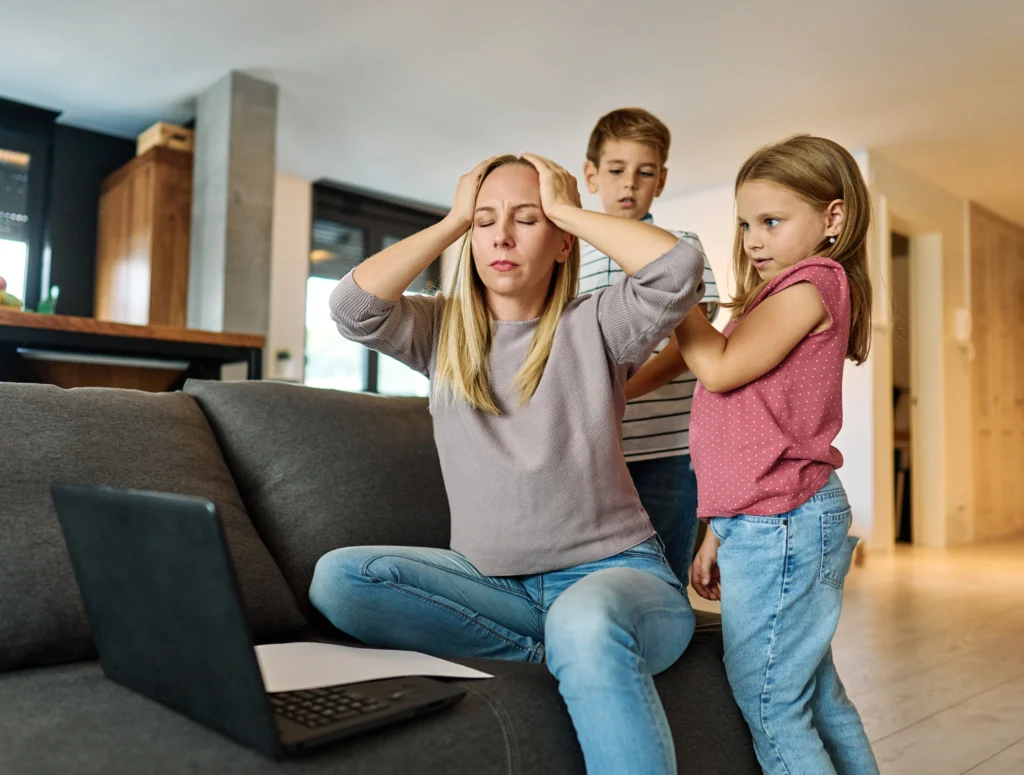
Fear based parenting is sneaky. It tends to show up dressed as responsibility.
It sounds like: “Because I said so.” “You’ll never succeed if you keep doing that.” “What will people think?” “You can’t handle that yet.”
But underneath every one of those statements sits a much quieter belief: “If I don’t control this, something bad will happen.”
This is the moment the conscious parent learns to catch themselves.
Ask honestly: “Am I responding to what my child actually needs, or am I responding to my own anxiety?”
The Benefits of mindful parenting for child development are well documented. Children raised in emotionally responsive homes tend to grow into people with stronger problem solving skills, healthier self esteem, and a real capacity to handle stress.
Fear shrinks the space children need to grow. Trust opens it back up.
2. Regulate Before You Redirect
Children borrow our nervous systems. That is not a metaphor. It is how it actually works.
Correcting from panic teaches anxiety. Guiding from a steady, calm place teaches stability.
This is the reason Emotional Regulation Kids develop traces back to us first. Harvard’s Center on the Developing Child has long pointed to co regulation as a cornerstone of emotional resilience in young children.
When your child makes a mistake, the shift is small but the difference is enormous. Move away from: “What were you thinking?!”
toward something like: “What happened? Help me understand.”
This is Active Listening Parenting lived out in a real moment, and it reflects the spirit of Nonviolent Communication, where we separate what a child did from who they are.
Fear based parenting is obsessed with outcomes. Conscious parenting stays with the process.
3. Replace Control with Structure and Dialogue
Letting go of fear based parenting does not mean letting go of boundaries. It means holding them differently.
Good structure actually makes both parents and children feel safer, not more exposed.
Some practical starting points for How to implement conscious parenting techniques at home:
A. Hold Regular Check-Ins A weekly Family Meeting creates a consistent, calm space where children can say what’s bothering them before it builds into something bigger.
B. Encourage Age-Appropriate Independence Simple Toddler Activities built around small choices, picking an outfit, choosing a book, teach children that their preferences matter and that they’re capable.
C. Use Teaching, Not Threatening Trade fear based punishment for Positive discipline strategies for toddlers and older children. Firm boundaries and genuine empathy can absolutely coexist.
Something as straightforward as: “I won’t let you speak disrespectfully. Let’s try again.”
When families practice conscious co-parenting, caregivers who stay consistent with each other remove a lot of the insecurity that fuels power struggles at home. Parents looking into Conscious Co-Parenting NJ approaches regularly notice that when communication aligns, behavioral conflict drops.
Structure gives children safety. Fear just teaches them to be afraid.
Real-Time Parenting Reality
We are raising children in a culture built for comparison. Every milestone gets posted, measured, and ranked. Academic pressure starts earlier than it ever did. Scary news cycles run constantly.
Parenting from worry has never felt more justifiable.
And yet, child psychology research keeps pointing to the same uncomfortable finding: overprotective, fear based homes often produce more anxious children, not fewer.
This is why Holistic Child Development is worth taking seriously, because emotional, cognitive, and social growth all need room at the table.
More parents are looking toward therapy, coaching, and the Best Parenting Books to interrupt patterns that were handed down to them. The shift happening across the country is real: awareness is gradually replacing control.
A Personal Reflection
Fear has a very convincing voice.
“If I don’t push harder, they’ll fall behind.” “If I don’t step in, they’ll fail.”
But most real growth I’ve witnessed in children happened when a parent stepped back with trust rather than forward with control.
Space allows resilience to form. Small failures teach children what they’re actually made of. A parent who stays calm when things feel uncertain shows a child what courage looks like up close.
That quiet shift is what mindful parenting really is at its core.
Conclusion: Choosing Trust Over Anxiety
This isn’t about pretending risks don’t exist. It’s about meeting them with intention instead of panic.
One thing to try today, before anything else:
The next time you feel the urge to correct your child, stop for just a second and ask: “Am I protecting them right now, or am I trying to control what happens?”
That question, when you really sit with it, changes things.
If you would like deeper guidance on conscious parenting and emotional growth, explore our consultations and learning resources at https://vedangibrahmbhatt.com/.
Follow us on Instagram and YouTube, for ongoing parenting insights and expert guidance.
For the latest news and updates, click here to view our recent press releases and stay connected with our work.
Parenting from fear builds compliance.
Parenting from awareness builds confidence.
And confident children grow into capable adults.